
Border Fencing Work in Churachandpur to Begin Soon After Cabinet Clears Compensation Dispute
The Indo-Myanmar border fencing work is being executed by the Border Roads Organisation (BRO)
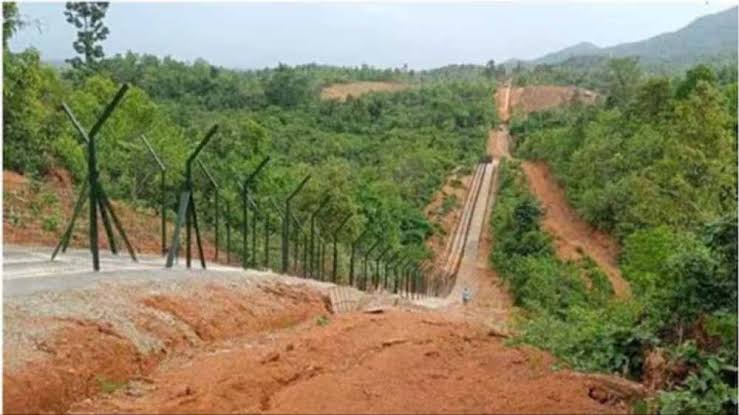
Border fencing work along a 27-kilometre stretch in Manipur’s Churachandpur district bordering Myanmar is expected to commence shortly after the state cabinet resolved a long-pending dispute over land acquisition compensation, official sources said.
The fencing project is part of the Centre’s broader initiative to strengthen security along the Indo-Myanmar border amid concerns over illegal infiltration, narcotics trafficking, arms smuggling, and other security-related incidents in the north-eastern region.
India shares a 1,643-km border with Myanmar, of which 398 km falls along Manipur. Border fencing work has already begun in Mizoram, Nagaland, and parts of Manipur.
According to state government sources, the proposed fencing between Border Pillars 43 and 47 in Churachandpur district had remained stalled since 2025 due to disagreements over compensation for land acquisition. The deadlock was resolved after the Manipur cabinet, during its meeting on May 7, approved an enhanced compensation package for affected landowners.
The land identified for acquisition covers nearly 80 hectares in the southern Manipur River area along the Myanmar border.
Officials stated that the fencing project has become crucial in view of several incidents reported over the past three years involving cross-border infiltration and illegal smuggling activities through unfenced stretches.
Sources further said Chief Minister Yumnam Khemchand had taken up the matter seriously and placed it before the cabinet to ensure timely implementation of the project.
The Indo-Myanmar border fencing work is being executed by the Border Roads Organisation (BRO). In the Moreh sector, a 9.2-km fencing stretch along with a parallel patrolling road has already been completed.
The Cabinet Committee on Security has reportedly allocated Rs 31,000 crore over a ten-year period for fencing the Indo-Myanmar border. The Centre has also scrapped the Free Movement Regime (FMR), which earlier allowed people residing along the border to travel up to 16 km on either side without travel documents.
However, the fencing initiative has drawn opposition from several tribal and civil society organisations in Manipur.
Several Naga organisations in the past have opposed the proposed fencing in Ukhrul and Kamjong districts and urged both the state and central governments to halt the project in those areas.
On September 29, 2025, Kuki village chiefs residing along the Indo-Myanmar border jointly issued a communiqué opposing the fencing work, alleging that it would adversely affect ancestral lands and traditional livelihoods. The chiefs called for immediate suspension of fencing activities and withdrawal of security forces and machinery from the affected areas.
The statement, signed by over 20 village chiefs from villages including Neh Shingnu, Lhungchin, Molm, and Moreh, argued that the fencing would weaken historical ties, disrupt customary land ownership, and threaten the rights and security of border communities.
Earlier, in January 2025, the United Zou Chiefs’ Association Manipur (UZCAM) submitted a memorandum to Union Home Minister Amit Shah expressing concern over the scrapping of the FMR and the decision to construct fencing along the Indo-Myanmar border.
The memorandum stated that the move would severely affect tribal communities in the region, particularly the Zou tribe, noting that nearly 60 per cent of the border areas in Churachandpur district are inhabited by Zou settlements.
Last year, the Zomi Council (ZC) has also voiced strong opposition to the fencing project in the Behiang range of Lamka, arguing that the move would divide families living across the border, disrupt cross-border trade and cultural exchanges, and restrict access to ancestral lands.
The council further alleged that local communities were not adequately consulted before the project was initiated and termed the fencing plan a “retrogressive step” that undermines the traditional Free Movement Regime enjoyed by border communities for generations.


The Hills Journal
K. Salbung, Churachandpur
Manipur-795128