
The Kuki-Zo Can’t Be Everyone’s Battlefield
If seven men can be apprehended over two destroyed houses, where is the same urgency when six Kuki-Zo civilian lives have been taken?
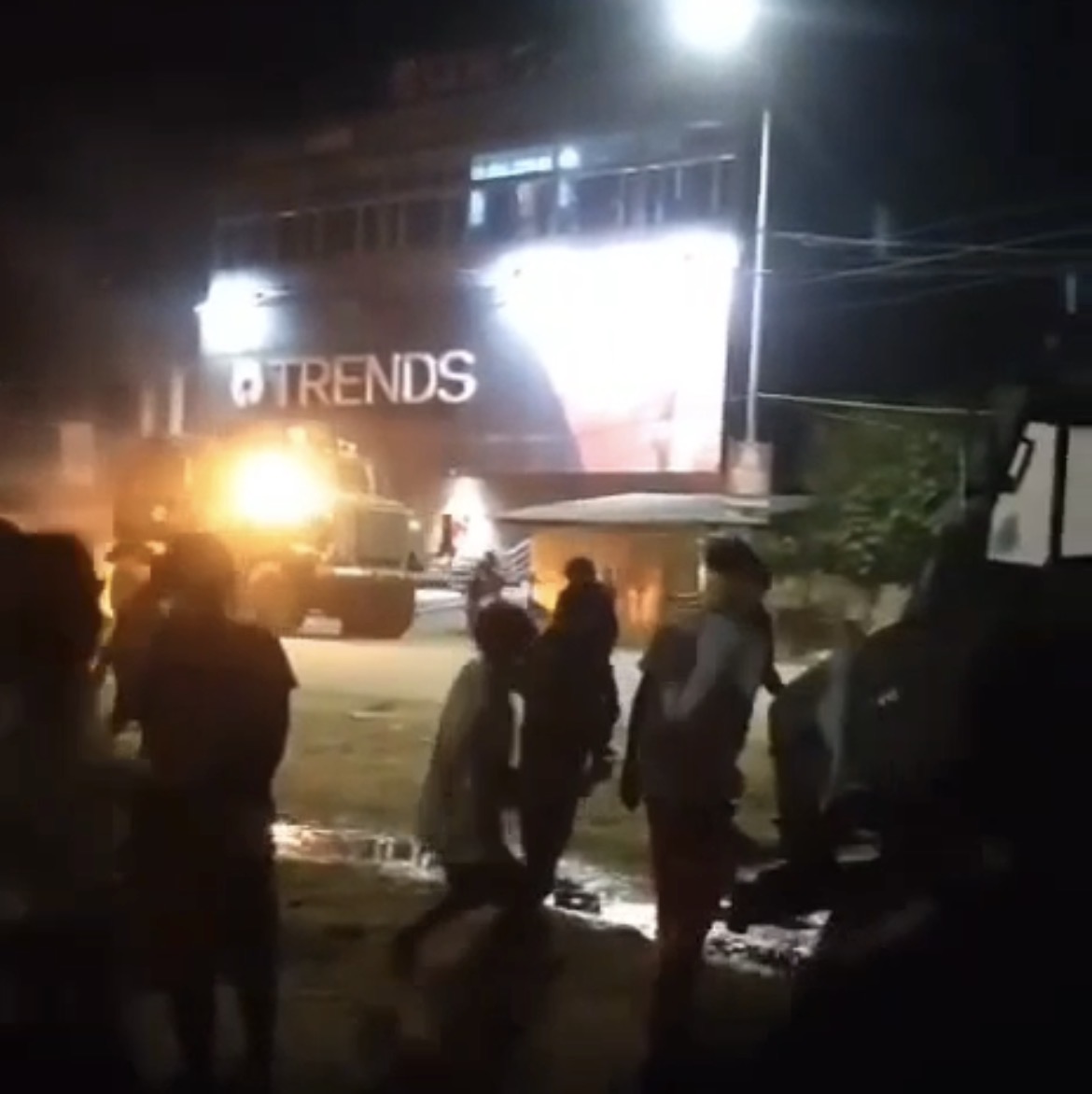
Seven Kuki-Zo men have reportedly been arrested by central security forces following the burning of two houses in Chawangkining, a Liangmai Naga village in Kangpokpi district. The arrests have triggered anger and public protests in Kangpokpi, coming at a time when relations between ordinary Kuki-Zo and Naga communities in the northern hills of Manipur remain painfully fragile.
What does justice look like when security responses appear repeatedly heavier in Kuki-Zo areas?
The contrast is difficult to ignore. Six Kuki-Zo civilians were killed within three days in Tamenglong and Noney, in attacks by NSCN-IM and ZUF(K). The victims included women, pregnant woman and civilians engaged in ordinary work and farming. Demands for arrests and accountability followed, yet there has been no comparable public announcement of arrests of those accused in these killings. Then came Chawangkining. Two houses were burned in the Liangmai Naga village following an overnight attack, and seven Kuki-Zo men were reportedly apprehended in connection with the incident.
The question, therefore, is not whether the destruction of those homes should be investigated, it absolutely should. The question is why the machinery of security and apprehension appears so immediate in one case, while six Kuki-Zo civilian deaths have yet to produce the same visible measure of accountability.
If seven men can be apprehended over two destroyed houses, where is the same urgency when six Kuki-Zo civilian lives have been taken?
A house can be rebuilt. A life cannot. Justice must not become more visible when the victim belongs to one community and less visible when the victim belongs to another. If the state demands accountability for Chawangkining, then the Kuki-Zo have every right to demand accountability for Tamenglong and Noney.
In fact, the Chawangkining incident took place on the night of September 15–16. Reports say firing continued for several hours, two houses were burned and others damaged, while CRPF personnel were stationed nearby. The identities and responsibility of those involved must be established through a credible investigation rather than assumption or collective punishment.
That distinction matters because the Kuki-Zo population has repeatedly experienced the presence of security forces not simply as protection but as another source of fear.
Last year, in March 2025, Lalgouthang Singsit, a 30-year-old Kuki protester, died after sustaining gunshot injuries during clashes between protesters and security forces in Kangpokpi. His death followed protests over the Union government's directive concerning free movement along Manipur's highways. More than 40 people, including women and police personnel, were reported injured in the clashes.
For many Kuki-Zo families, incidents such as this remain deeply embedded in public memory. Manipur is undeniably a disturbed state but precisely because it is disturbed, the responsibility of the state and its security apparatus should be to exercise greater restraint, greater transparency and greater consistency not to make ordinary civilians feel that they are perpetually under suspicion.
Who protects the people when protection itself appears uncertain?
The emergence of village volunteers cannot be understood without this context. Communities do not ordinarily arm themselves because they enjoy living with guns. In many places, village defence structures have emerged because people fear being left exposed when violence reaches their doorstep. That does not make every village volunteer or every armed group automatically legitimate. Nor does it excuse attacks on civilians. But neither should the existence of village volunteers become a convenient reason to treat an entire population as suspect.
The state has a duty to distinguish between an armed perpetrator and the civilian population living around him. There is also a much longer history behind the present distrust. The Government of India signed the Framework Agreement with NSCN(IM) on August 3, 2015. The government subsequently acknowledged in Parliament that a final accord had not yet been signed and that Manipur had expressed apprehensions regarding the Naga peace process. Whatever one's position on the Naga political question, the unresolved nature of that process has consequences beyond the negotiating table. Communities living along contested and politically sensitive frontiers continue to bear the consequences of insecurity. But those consequences should not be paid by civilians.
For decades, the Kuki-Zo population has found itself caught between competing political and armed interests. The community has experienced violence from different directions and has repeatedly had to navigate the consequences of larger political struggles over territory, identity and power. That history makes today's events even more troubling. Delhi's political calculations should never require an ordinary Kuki-Zo villager in Manipur to pay the price.
If there are perpetrators behind the Chawangkining attack, they should be identified, arrested and prosecuted on the basis of evidence. An ordinary village guard should not become collateral damage in an atmosphere of collective suspicion. Justice cannot mean one standard for one community and another standard for another.
The central forces are deployed in Manipur to protect citizens and maintain security. That responsibility must extend equally to Kuki-Zo, Naga, Meitei and every other civilian. The answer to violence cannot be more insecurity for another civilian population. If the state wants the villages to put their faith in its protection, then that protection must be visible, impartial and worthy of trust. Because the Kuki-Zo cannot continue to be the place where every political failure, every armed confrontation and every unfinished negotiation comes to collect its human price.
(Views expressed are personal)
Lhainunthem Khongsai is a student and a an Author of two books. she can be reached at lhainunthemkhongsai@gmail.com


The Hills Journal
K. Salbung, Churachandpur
Manipur-795128