
Did Thuingaleng Muivah recent visit to Ukhrul reignite new fire in Manipur Hills?
“From Shillong Accord to Cease-fire Politics and the Unfinished Naga Question”
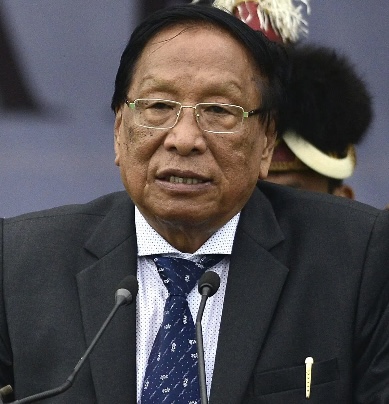
When Thuingaleng Muivah visited his native village Somdal, Ukhrul in October 2025 after nearly six decades away, the visit was described by supporters as historic, emotional and symbolic. For many, it marked the return of a revolutionary leader who had spent most of his life away from his homeland, underground, in exile, or at negotiation tables across foreign capitals.
Yet for the Kukis across Manipur’s fragile hills, the visit reopened old wounds and revived difficult political memories.
At the time of his visit, Manipur was already burning under ethnic tensions, displacement, mistrust and violence. In such a deeply divided atmosphere, Th Muivah’s homecoming was never going to be viewed as an ordinary personal visit. It carried the weight of history, insurgency, cease-fire politics, unresolved negotiations and decades of bloodshed associated with the Naga political movement.
To understand why his 2025 visit generated both celebration and fear, one must revisit the long and complicated history of the Indo-Naga political conflict.
In July 1963, under Prime Minister Jawaharlal Nehru, an agreement led to the formation of Nagaland as the 16th state of the Indian Union and on December 1, 1963, Nagaland officially attained statehood. The move emerged from years of negotiations between Naga representatives and the Government of India.
The disagreements surrounding Naga political identity deepened further after the signing of the Shillong Accord in 1975. The accord, signed between representatives of the Naga National Council (NNC) led by Angami Zapu Phizo and the Government of India, required underground cadres to accept the Indian Constitution and surrender arms. For some, it was seen as a possible pathway toward peace after years of insurgency. But for Th. Muivah and several others, the Shillong Accord represented surrender and betrayal.
Muivah strongly opposed the accord and accused those who signed it of compromising the Naga national cause. The divisions within the movement eventually led to the formation of the National Socialist Council of Nagaland (NSCN) on January 31, 1980. The organization emerged directly in opposition to the Shillong Accord and sought to continue the armed struggle for Naga sovereignty.
However, internal political and tribal divisions later fractured the organization itself. On April 30, 1988, the NSCN split, giving rise to the NSCN-IM faction led by Isak Chishi Swu and Th. Muivah.
Over the years, the NSCN-IM emerged as one of the most influential insurgent organizations in Northeast India. Indian authorities and several government officials frequently described the outfit as “ terrorist ” and accused it of extortion, underground taxation, armed intimidation and illegal activities conducted in the name of the Naga revolutionary movement. At the same time, the organization projected itself as the principal political representative of the Naga cause.
History also records the heavy human cost associated with the movement. Many individuals who supported the Shillong Accord were branded traitors and collaborators. Several reportedly lost their lives amid internal political violence and targeted assassinations.
One of the most controversial incidents was the assassination of Yangmaso Shaiza, the former Chief Minister of Manipur and the first hill-based Chief Minister of the state. Shaiza was assassinated on January 30, 1984, at his residence in Imphal. Years later, when questioned about the incident, Th Muivah reportedly remarked, “Personally I regret what happened, but politically I cannot regret.” He further accused Shaiza of supporting the Shillong Accord and taking what he considered the “wrong political decision.”
Another major political figure from the Tangkhul community, former Manipur Chief Minister Rishang Keishing, also survived an assassination attempt which Th Muivah later reportedly acknowledged politically and said he gave order for the assassination attempt.
Despite its militant history, the NSCN-IM gradually transitioned from armed confrontation to political negotiation. On July 25, 1997, under Prime Minister I.K. Gujral, the Government of India signed a historic ceasefire agreement with the NSCN-IM, which officially came into effect on August 1, 1997. It marked a major turning point in the conflict, shifting the movement from battlefields to negotiating tables.
Since then, more than eighty rounds of talks have reportedly taken place between the NSCN-IM and the Government of India in several locations such as Paris, Amsterdam, Chiang Mai, Bangkok and New Delhi. In September 1998, former Prime Minister Atal Bihari Vajpayee met Th Muivah in Paris, a meeting that Th Muivah himself described as “ historic.”
Yet despite decades of talks, the final political settlement remains unresolved.
One of the major criticisms surrounding the Indo-Naga peace process is whether the negotiations became overly centered around one faction and one leadership structure. Although the negotiations are commonly referred to as “Indo-Naga talks,” many other Naga organizations, tribes, elders and stakeholders have repeatedly questioned whether they were genuinely represented in the process.
In one interview, Muivah reportedly asserted that while the Government of India was free to hold discussions with other Naga organizations, the NSCN-IM would not participate alongside them. Such statements strengthened concerns among critics who believed the peace process was becoming politically monopolized by one faction.
Former Nagaland Chief Minister S.C. Jamir also remarked in an interview that unless Naga elders, civil organizations and other factions were included in the peace process, lasting peace would remain difficult to achieve.
At the same time, mistrust between the NSCN-IM and the Government of India deepened in the early days of their talks. One major dispute involved the territorial scope of the ceasefire agreement. While the NSCN-IM insisted that the ceasefire should apply to all “Naga inhabited areas,” officials in New Delhi later clarified that the agreement covered only Nagaland state. The disagreement created severe tensions and accusations of betrayal from the NSCN-IM leadership.
Questions also emerged regarding Muivah’s foreign connections during the years of insurgency. During one period, he reportedly visited Pakistan, though he later claimed he had received neither money nor arms from Pakistan after 1971. Critics, however, questioned what relationships may have existed before that period, while Indian intelligence circles reportedly suspected attempts to procure arms during ceasefire years.
Even after decades of negotiations, Muivah repeatedly maintained that the Nagas were never Indians and were never conquered by India. Such statements reflected the ideological distance that still existed between the Naga nationalist vision and the Indian state.
It is within this long and troubled political history that Muivah’s October 2025 visit to Manipur must be viewed.
In May 2010, Muivah had attempted to visit his native village Somdal in Ukhrul district, but the then Chief Minister of Manipur, Okram Ibobi Singh, prevented the visit amid fears of unrest and political instability. Security forces were deployed, tensions escalated and the visit never materialized.
At one time, Th Muivah described his willingness to visit his native village in an interview with the Northeast Sun and proposed the visit as “something very important,” a statement that immediately sparked political speculation. But what exactly did “something very important” mean? Was it merely the emotional longing of a man returning home after decades away from his native land, or did the visit carry deeper political significance within the already fragile atmosphere of Manipur’s hills? The ambiguity surrounding the statement only intensified suspicion among communities who viewed the timing of the visit with concern, especially in a state long shaped by insurgency, territorial disputes and ethnic tensions.
Years later, amid one of the darkest periods in Manipur’s recent history, Th Muivah finally returned to his native village.
For supporters, it was an emotional homecoming. But for many others, especially for the Kuki communities already living under fear and displacement, the visit revived painful memories of the 1990s ethnic violence associated with the NSCN-IM era.
Following Th Muivah’s 2025 visit, unrest gradually spread into several hill districts of Manipur. Until then, much of the violence and instability had largely remained concentrated in the Imphal Valley. However, tensions in the hills soon intensified after the visit, deepening fear and uncertainty among vulnerable communities.
Among the incidents that further heightened tensions was the reported abduction and killing of two Kuki villagers, Thengin Baite (42) and Thangboimang Khongsai (35) in Ukhrul district. Local authorities from Shangkai village strongly alleged the involvement of armed volunteers belonging to the Tangkhul community, accusations that added another layer of mistrust and fear across the already volatile hills.
Soon afterward, several surrounding Kuki villages in Ukhrul district reportedly began facing severe insecurity and existential fear. The year 1993 remains one of the most traumatic chapters in Kuki collective memory. During the Tangkhul-Kuki ethnic conflict, numerous Kuki villages were burned, thousands were displaced and countless lives were lost.
Even after more than three decades, the wounds of 1993 remain unresolved for many survivors. Stories of massacres, Rape, Burned villages, Killings of women and children and forced displacement continue to live within the memories of affected kuki families.
As recent tensions rise again in the hills, many fear that the old wounds are reopening. The memories of past violence continue to shape present anxieties, especially among kuki communities that believe justice and reconciliation were never fully achieved. For many Kukis, history has rarely been kind and the shadows of the past still linger heavily over Manipur’s fragile hills today.
One latest incident that deeply shocked the nation was the killing of the three prominent pastors of Thadou Baptist Association India (TBAI), widely regarded as emissaries of peace and reconciliation. They were reportedly ambushed while traveling from Churachandpur toward Kangpokpi, an incident that triggered widespread grief and condemnation across the region. It alleged the involvement of the ZUF (Kamson) faction, proxy aligned with the NSCN IM network.
Another incident that followed was the reported holding of fourteen Kuki Hostages in Senapati by members linked to Senapati District Students’ Association. Families continue to live in fear, not knowing whether they are alive or dead. Another grim reminder of Manipur’s hill collapsing trust and fragile security after Th Muivah visits.
Such developments inevitably raise uncomfortable political questions. Was the renewed tension in Kuki-inhabited areas merely a tragic coincidence within an already unstable Manipur, or did the violence serve a larger political purpose within the long-stalled Indo-Naga peace process?
Others argue that Muivah’s return to Manipur during one of its most fragile periods may have carried deeper political calculations beyond a personal homecoming. After almost thirty years of peace talks that have produced limited visible outcomes, some observers question whether the re-emergence of tensions was intended to reposition the Naga political issue back into national focus. While such claims remain matters of political speculation, the timing of the visit and the unrest that followed have continued to fuel debate across the region.
Today, the debate is no longer only about sovereignty or ceasefire agreements. It is also about representation, accountability and the future of coexistence in the Northeast.
Can one faction speak for all Nagas?
Can peace emerge without wider participation from all affected communities?
And in a land already wounded by decades of violence, can history return without reigniting old fires?
(Views expressed are personal)


The Hills Journal
K. Salbung, Churachandpur
Manipur-795128