
Kuki Inpi Manipur Recalls Persecution Against the Kuki Community in the 1990s Following Recent Attacks on Kuki Villages
The violence of the 1990s was marked by a consistent pattern of human rights violations against civilians.
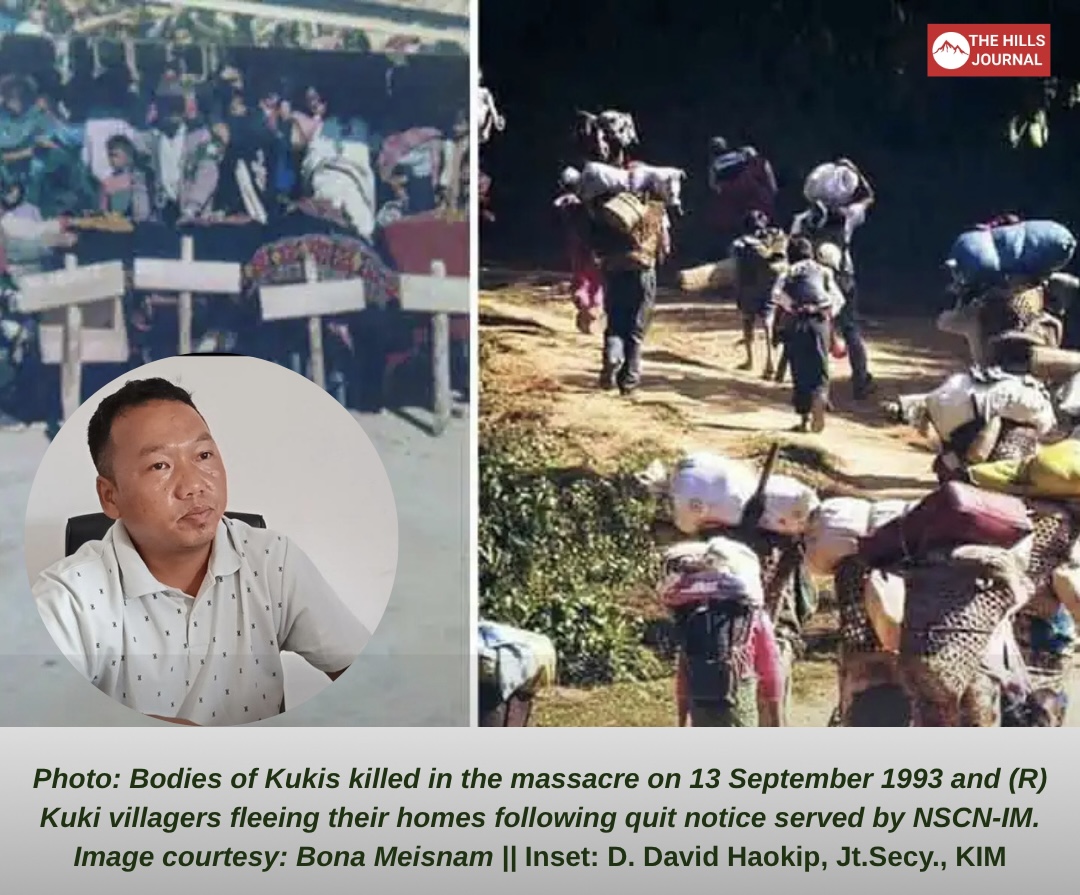
The apex body of the Kuki community, Kuki Inpi Manipur, has recalled the persecution of the Kuki community during the 1990s following recent attacks on Kuki villages, the latest being the reported attack on Leikot Village under Noney district in Manipur on Thursday morning.
Joint Secretary of Kuki Inpi Manipur, D. David Haokip, while speaking to the media in Churachandpur on Thursday, said that at around 5:30 a.m., reports were received that Leikot Village in Noney district had reportedly been attacked by NSCN-IM and that the village had been burned down. However, fortunately, no casualties have been reported.
According to information received from the ground, heavily armed assailants launched an attack on the village during the early hours, compelling local volunteers, who were equipped only with licensed single-barrel firearms, to retreat in the face of overwhelming firepower.
Following the attack, several houses and other properties in the village were reportedly set ablaze, leaving innocent civilians displaced and traumatized. Such acts of violence against civilian settlements are unacceptable and constitute a grave threat to peaceful coexistence and communal harmony in the hill districts of Manipur.
He also expressed concern regarding the alleged misuse of Kuki Inpi Manipur's letterhead, stating that such acts undermine the credibility and integrity of an established community institution. He further recalled the violence that engulfed large parts of Manipur during the 1990s, stating that it remains one of the gravest human tragedies in the history of Northeast India.
According to documented accounts of the scale of atrocities and devastation, more than 900 Kuki civilians were killed, over 360 Kuki villages were uprooted, and more than 100,000 civilians were forcibly displaced from their ancestral homes. He said the violence of the 1990s was marked by a consistent pattern of human rights violations against civilians.
He recalled that on October 10, 1992, a mother and her daughters were raped along with others, and referred to the massacres in Joupi, Janglenphai, Gelnel, and other villages, as well as the killing of 15 infants in Taloulong village.
He further stated that on November 28, 1994, at approximately 11:30 p.m., NSCN-IM cadres, disguised as Indian Army personnel, entered Thingsen village and ordered all the men out of their homes to lie face down. During the night, 24 men were reportedly executed.
He also recalled that in January 1994, at approximately 9:00 p.m., a group of women foraging for vegetables in the jungle was shot at point-blank range with sophisticated weapons, resulting in the deaths of seven women at the scene.
David said the suffering of the Kuki people did not end with the atrocities of the 1990s. The present crisis, he said, demonstrates that the vulnerability of the Kuki community remains unresolved.
He said the burning of 13 Kuki villages and the deaths of 10 civilians in recent attacks carried out by NSCN and ZUF (Kamson) must be understood in the wider context of the persecution of the 1990s.
He further stated that the ongoing economic blockade imposed on the Kuki people for more than a month is another shameful act of collective punishment. Blocking food, medicines, fuel, and other essential commodities from reaching innocent civilians, he said, is not democratic agitation but economic strangulation. It is, he alleged, a cruel and calculated attempt to starve, isolate, and break the Kuki people. Such acts, he added, reveal the true face of those who speak of rights while denying others their basic right to life and survival.
David called upon journalists, researchers, human rights organizations, academic institutions, and responsible authorities to engage with survivors, examine historical records, and contribute to an objective understanding of this tragic period.
He also called for serious attention to the present pattern of attacks against Kuki communities, including the reported burning of 13 villages and the deaths of 14 civilians. He said these incidents must be independently examined, documented, and addressed with urgency.



The Hills Journal
K. Salbung, Churachandpur
Manipur-795128