
Kuki Inpi Manipur condemns Republic TV report labelling recently inaugurated Khulmi Bridge as a 'drug trafficking route'
Until Republic TV sets foot on the ground, it has absolutely no moral authority to lecture the people of the hill districts
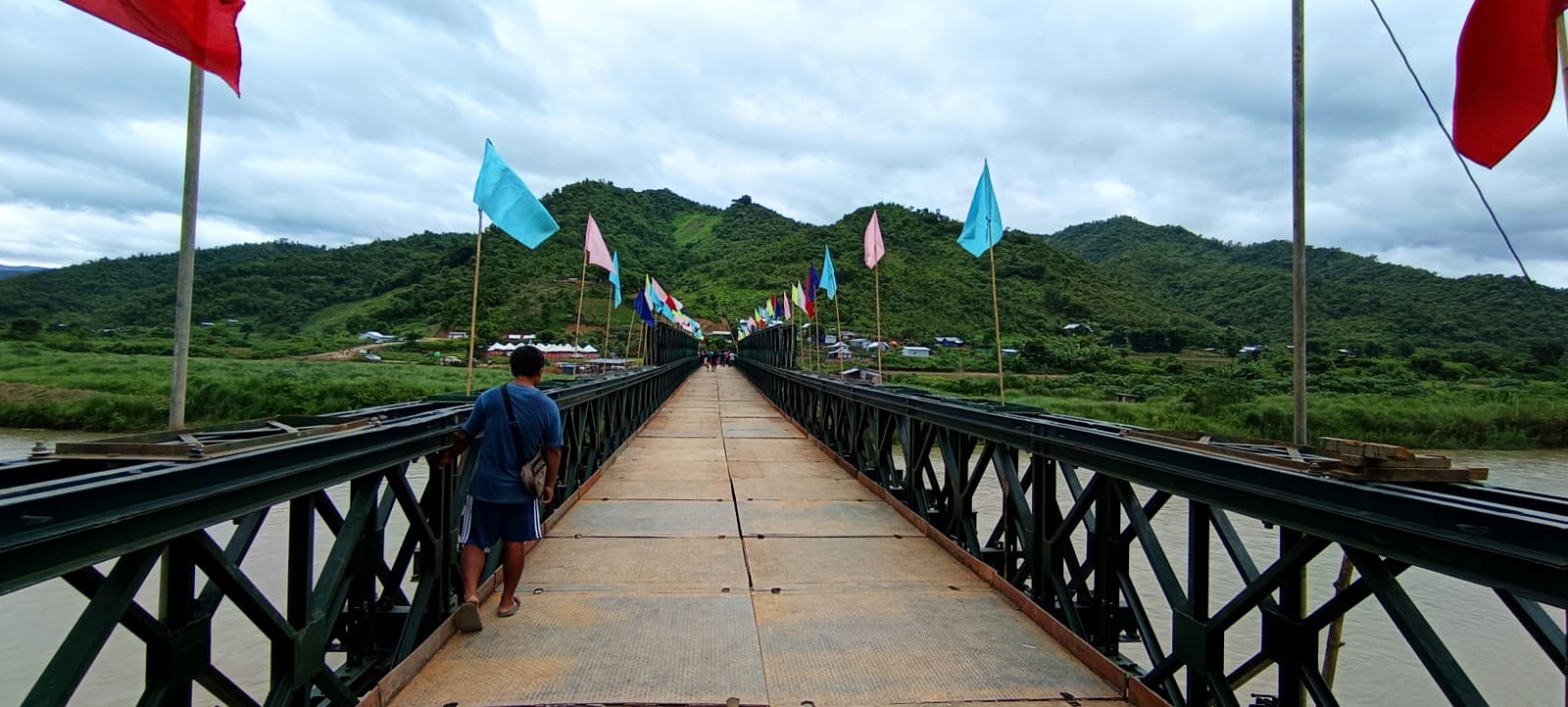
The Kuki Inpi Manipur (KIM) has condemned a Republic TV report that labelled the recently inaugurated Khulmi Bridge, connecting three districts in Manipur, as a drug trafficking route.
In an open letter addressed to Arnab Goswami, Editor-in-Chief of Republic TV; Linthoi Khoirom, journalist at Republic TV; and the Editorial Board of Republic TV, KIM stated that the channel's recent broadcast criminalising the Khulmi Bridge as a "drug trafficking route" is not merely bad journalism but "a malicious act of character assassination, deliberate disinformation, and dangerous, hate-fuelled propaganda."
Claiming that the statements made by the Editorial Board, Republic TV, and Linthoi Khoirom crossed the line from reckless sensationalism into outright defamation,
KIM alleged that Republic TV was actively manufacturing false narratives, completely detached from the reality on the ground, to target and demonise the people of Chandel, Tengnoupal, and Churachandpur districts.
KIM said, "The Khulmi Bridge over the Imphal River was built out of raw desperation and human suffering, not the imaginary criminal syndicates invented inside your television studio."
KIM stated that, for years, the total abandonment by the state government left residents completely isolated, forcing them to risk their lives daily. During the monsoon season, the river became a death trap, where at least eight people reportedly drowned while attempting to cross during emergencies.
Recalling that families were forced to wade through dangerous currents just to access emergency healthcare, purchase basic necessities, and send their children to school, KIM asked, "Where was Republic TV's 'investigative journalism' when these citizens were drowning? You were utterly silent."
The Kuki apex body stated that the Khulmi Bridge exists solely because the Kuki-Zo people refused to let more of their children and elders die while the authorities turned a blind eye. Since the government allegedly failed in its most basic duty to protect human life, civil society organisations in Chandel district, in coordination with Kuki-Zo leadership, built the bridge themselves through crowdsourced community funds and manual labour, the letter added.
To twist "this historic, life-saving triumph of community survival into a cheap drug-smuggling conspiracy is morally bankrupt and utterly repulsive," KIM stated, adding that Republic TV's allegation that the bridge is an unchecked route for the drug trade is "laughably absurd on its face."
"Had your newsroom bothered to perform even a shred of basic fact-checking, you would know that security forces are stationed a mere 100 metres from the bridge. But Republic TV does not care about facts. You did not visit the site. You did not speak to the grieving families who lost loved ones to the river. You did not interview the villagers. You did not review the formal appeals submitted to the Governor of Manipur that went ignored for years," the letter stated.
Instead, Republic TV chose "the cowardly route: sitting in high-tech, air-conditioned studios, screaming over microphones, and passing toxic judgment on a marginalised, vulnerable community whose daily struggles you are intellectually incapable of understanding." Arnab Goswami, the Editor-in-Chief, "must learn that shouting at the top of his lungs cannot manufacture evidence, and theatrical outrage can never replace real journalism," KIM added.
The letter further stated that Linthoi Khoirom's role in the report was "uniquely shameful" because, as a journalist from Manipur and the daughter of Khoirom Loyalakpa, editor of Naharolgi Thoudang, she cannot claim ignorance. According to KIM, she knows the harsh terrain of the hill districts, the severe administrative neglect, the crushing geographical isolation, and the infrastructure deficit faced by the people.
"Weaponising the media platform to peddle a half-baked, heavily biased, and unverified narrative against her own state's most neglected citizens is a profound violation of journalistic ethics," KIM stated.
The Kuki body further alleged that Linthoi had chosen to trade professional integrity for prime-time ratings, thereby actively deepening communal divisions and reinforcing prejudice against the Kuki-Zo people.
Stating that such a broadcast is dangerous, KIM added that, in a highly volatile and conflict-ridden environment, labelling a vital civilian bridge built by the Kuki-Zo community as a "drug cartel asset" acts as a direct dog whistle. According to KIM, such a broadcast incites hatred, invites state hostility, and paints a target on the backs of an entire community.
"You have insulted the hard-earned money, blood, and sweat of the ordinary citizens who built this bridge. You have spat on the memory of the eight victims who died because a safe crossing did not exist. You have reduced a humanitarian tragedy into a vulgar television circus," KIM stated.
The Kuki apex body added that if Republic TV possesses even a shred of genuine journalistic courage, its team should leave their protected studio desks, travel to the Khulmi Bridge, walk across it, look into the eyes of the families who buried their loved ones because of state neglect, and witness the reality firsthand.
Until Republic TV sets foot on the ground, it has absolutely no moral authority to lecture the people of the hill districts, KIM stated, adding that the Khulmi Bridge stands as a testament to public sacrifice and government failure.
"It exists because our people died, the state remained silent, and the community chose to save itself. Be ashamed of what you have broadcast. Correct the record immediately," the letter concluded.


The Hills Journal
K. Salbung, Churachandpur
Manipur-795128