
Kuki Bodies Slams Attack on Kharam Vaiphei, Alleges Collapse of Security, Warns of Protests
The organisations held the NSCN-IM and the Kamson faction fully responsible for the attack and demanded the immediate arrest of all perpetrators involved.
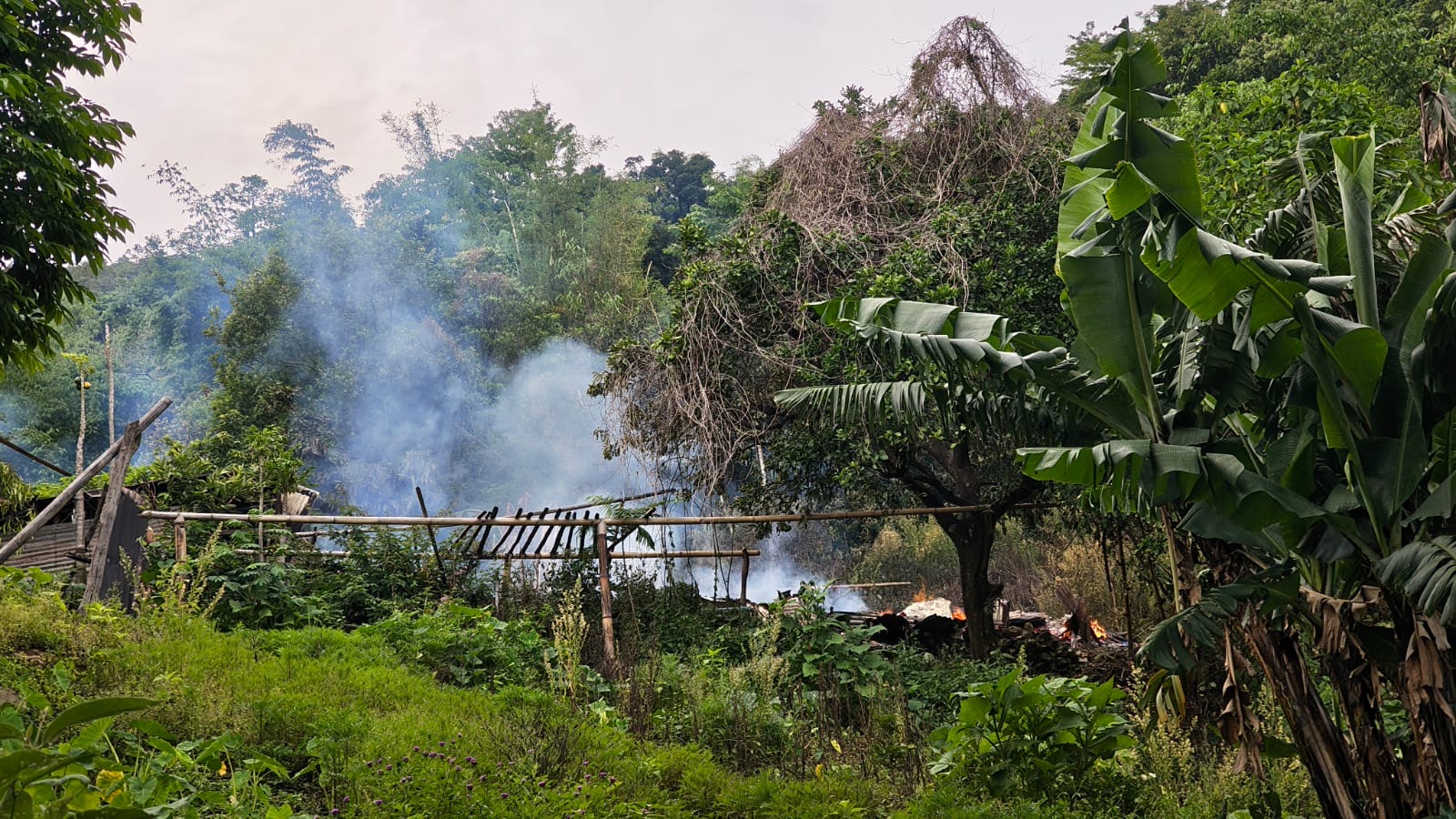
The arson attack at Kharam Vaiphei on May 30 has triggered widespread condemnation from several Kuki-Zo civil society organisations, which have demanded a thorough investigation, accountability for the perpetrators.
The Kuki Organisation for Human Rights Trust (KOHUR), strongly condemned the attack and burning of Kharam Vaiphei village in Kangpokpi district, alleging that the incident exposed a complete breakdown of civilian protection mechanisms in the violence-prone Leimakhong belt.
It accused armed cadres of the NSCN-IM and ZUF-K of carrying out the attack on the Kuki-Zo village under Kangchup Police Station, describing it as a “grave violation of human rights” and a direct assault on the lives, homes and dignity of innocent civilians.
The human rights body said the attack occurred barely a day after the redeployment of a company of the Central Reserve Police Force (CRPF) in the area under official orders aimed at maintaining law and order. It questioned how armed assailants were able to torch a village despite the presence of security forces nearby.
“That a fortified village could be attacked and burned within hours of a fresh security deployment raises serious questions about either the willingness or the capacity of the deployed forces to protect civilians,” KOHUR said.
Expressing deep concern over what it termed the Government's prolonged neglect of Kuki-Zo villages in the Leimakhong region, the organisation claimed that more than five Kuki-Zo villages had been attacked and set ablaze by armed Naga groups over the last two years.
According to KOHUR, despite repeated incidents of violence and destruction, no perpetrator has been arrested, creating what it described as a climate of impunity that has emboldened armed groups while leaving Kuki-Zo civilians vulnerable and unprotected.
The organisation alleged that a disturbing pattern had emerged in the region, where armed groups strike with impunity, security agencies fail to prevent attacks, and victims are denied justice even after suffering losses.
“Selective inaction is not neutrality; it amounts to complicity through omission,” the statement said.
KOHUR demanded an immediate and independent investigation into the Kharam Vaiphei attack, arrest and prosecution of those responsible, accountability for security lapses, comprehensive rehabilitation and compensation for affected families, and permanent security arrangements for vulnerable Kuki-Zo villages in the Leimakhong belt.
The organisation also appealed to the Government of India, the National Human Rights Commission and international human rights bodies to take note of what it called the continuing violence against the Kuki-Zo people and to ensure that those responsible are brought to justice.
Reaffirming its solidarity with the victims, KOHUR said the Kuki-Zo people “will not be erased through fire and silence” and pledged to continue advocating for the protection of their fundamental rights.
The Committee on Tribal Unity (CoTU), also strongly condemned the attack and burning of multiple Kuki-Zo houses at Kharam Vaiphei village in Kangpokpi district, alleging that cadres of the proscribed NSCN-IM and its alleged proxy outfit, the ZUF (Kamson faction), were behind the attack.
It described the incident as a “cowardly and calculated act” aimed at provoking the Kuki-Zo community at a time when tensions remain high over the killing of three Kuki-Zo church leaders on May 13 and the continued captivity of 14 Kuki-Zo villagers reportedly held in Senapati district.
The committee alleged that the attack was intended to inflame public emotions and destabilise the fragile situation prevailing in the hill districts. It said the Kuki-Zo community was still grieving the deaths of Rev. Dr. V. Sitlhou, Rev. Kaigoulun and Pastor Paogoulen, while simultaneously grappling with uncertainty over the fate of the hostages.
Expressing serious concern over the incident, the committee criticised security forces deployed in and around Kharam Vaiphei, accusing them of failing to prevent armed militants from operating freely in the fringe areas of Kangpokpi and Tamenglong districts.
CoTU further alleged that armed groups were attempting to create hostility between Kuki-Zo and Naga communities through acts of intimidation, arson and threats of eviction. It claimed that such actions were being carried out under what it termed a narrative of “Naga supremacy” in the region.
Escalating its criticism, the organisation also alleged that the prevailing situation was being manipulated by certain political actors seeking to trigger fresh communal unrest for political gains. It claimed that radical elements were attempting to engineer instability in Manipur through the activities of proscribed armed groups.
Calling for decisive government intervention, CoTU urged the state administration led by Chief Minister Y. Khemchand Singh to restore public confidence by ensuring strict enforcement of law and order and taking firm action against those responsible for the violence.
The committee maintained that lasting peace could only be achieved through impartial governance, equal treatment of all communities and the rejection of policies that encourage communal polarisation.
Meanwhile, the Kuki Students' Organisation Sadar Hills (KSO-SH) also vehemently condemned the alleged 'Calculated Assualted' on Kharam Vaiphei village in Kangchup Geljang Sub-Division of Kangpokpi district, alleging that the assault was a "deliberate and premeditated operation" carried out by the NSCN-IM and its proxy Kamson faction.
The student body described the incident as a barbaric act aimed at terrorising the Kuki-Zo population and accused the attackers of attempting to wipe out the village through a calculated campaign of violence.
The organisation alleged that repeated combing operations by security forces had forced local village volunteers to vacate the area, leaving vulnerable settlements exposed to attacks. It claimed that the timing and execution of the latest assault reflected a sinister design to target civilians and instil fear among residents.
KSO-SH further linked the attack to what it termed a recurring pattern of aggression, pointing out that it came barely a month after the killing of three church leaders in an ambush between Kotjim and Kotlen.
"The repeated targeting of civilians and community leaders demonstrates a pattern of ethnic aggression and a campaign of annihilation against our people," the organisation said.
The student body also levelled serious allegations against a CRPF unit stationed in the area, questioning its conduct during the attack. It claimed that despite being present, the force allegedly failed to take retaliatory or protective action while the village was under siege.
Calling the alleged inaction "deeply alarming", KSO-SH demanded an immediate and impartial investigation into the role of the CRPF personnel deployed in the area and sought accountability from those responsible.
The organisation held the NSCN-IM and the Kamson faction fully responsible for the attack and demanded the immediate arrest of all perpetrators involved.
Warning of intensified democratic agitation if action is not taken, KSO-SH said it would not remain silent in the face of what it described as acts of terror and ethnic cleansing directed against the Kuki-Zo community.
Reaffirming its commitment to safeguarding the interests of its people, the organisation asserted that it would continue to stand firmly against all forms of aggression targeting Kuki-Zo villages.
KSO-SH also appealed to media organisations to exercise caution and refrain from publishing reports without substantial verification and evidence.



The Hills Journal
K. Salbung, Churachandpur
Manipur-795128