
From 'Sanaleibak' to a Divided Land: Manipur Needs Justice, Accountability for Peace
It is ordinary civilians who suffer from the consequences of poorly conceived policies and communal politics.
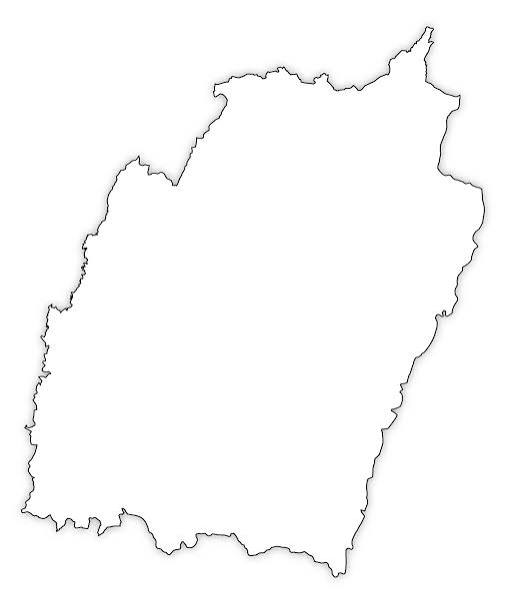
The State of Manipur, once described by India’s first Prime Minister as the “Jewel of India” and fondly referred to by the Meitei people as “Sana Leibak” (Land of Gold), was long regarded as a land where the Meitei, Naga, and Kuki communities coexisted peacefully. Today, however, that very state has descended into an atmosphere marked by hatred, mistrust, and lawlessness.
Conflict may be inevitable in a diverse society, but massacre, targeted violence, or ethnic cleansing of one community by another within the same state is both unlawful and unacceptable.
Since May 3, 2023, Manipur has ceased to function as a reliable and secure state under the present dispensation. The Kuki community, which many believe has long faced subjugation at the hands of the majority Meitei community, continues to suffer to this day. The absence of meaningful solutions and the apparent indifference shown by authorities are reflected in the manner in which the government has discharged its responsibilities throughout the crisis.
A Less Human Community?:
Under the Constitution of India, every citizen is equal before the law. Yet, in Manipur, the law itself appears to have become a tool benefiting those who wield political power and represent the majority population. This perception is further reinforced by the disproportionate allocation of developmental funds to the hill areas between the Kuki and Naga communities.
For example, the Naga community is perceived to receive comparatively greater funding and government support in infrastructure development and social welfare services than the Kuki-Zo community.
It is undeniable that the Kuki-Zo people have suffered immensely in terms of inter-district connectivity since the outbreak of the Meitei-Kuki conflict. To access basic services and exercise legitimate rights, Kuki civil society organisations have repeatedly urged both the State and Central Governments to ensure uninterrupted connectivity, particularly along the Kangpokpi–CCP–Kangpokpi and CCP–Moreh–Kangpokpi routes. They have also requested helicopter services to address the ongoing disruptions.
However, these demands have largely gone unanswered. Ironically, when fresh violence erupted in Litan and access between Ukhrul and Imphal became a security concern, the Government of Manipur promptly arranged helicopter services between Imphal and Ukhrul. Such selective urgency naturally raises questions among affected communities regarding the impartiality of the administration.
Meanwhile, despite reports, eyewitness accounts, and repeated incidents of firing in the Litan-Sareikhong area over recent weeks, the government has largely remained a spectator in restoring peace and justice. The Kuki community reportedly came under repeated attacks, while Tangkul militant groups were allegedly allowed to operate with impunity. Questions continue to arise regarding the role of the authorities and the delayed delivery of justice.
For many within the Kuki-Zo community, justice has remained distant since May 3, while swift state responses appear more visible when incidents affect the Tangkul or Meitei communities. This perception has deepened feelings of discrimination and alienation among the Kuki-Zo people.
Tangkul Warmongering and the Politics of Hatred:
Several sections within the Tangkul militant network have, since years, contributed to the deterioration of peaceful coexistence in Manipur by exploiting the restraint and peaceful approach adopted by Kuki civil society organisations.
These militant elements allegedly operate through proxy organisations such as the FNCC, their armed wing ZUF(K), and associated bodies including the SDSA and sections of the NPO/UNC, in pursuit of their hollow political objectives that have further destabilised communal harmony.
Ultimately, it is ordinary civilians who suffer from the consequences of poorly conceived policies and communal politics. The prolonged road blockade imposed months ago by the FNCC along the Kangpokpi–CCP route was widely viewed as part of a coordinated effort involving certain Meitei hardliners and Tangkul militant proxies.
Similarly, the ZUF(K), acting beyond the bounds of lawful authority, allegedly carried out idiotic violent actions against Kuki-Zo villagers under the pretext of curbing poppy cultivation. Despite these actions, the group continued attempting to portray itself as acting in the community’s interest.
Equally concerning was a press statement issued weeks earlier by the United Naga Council (UNC), a prominent Naga civil society organisation influential in coordinating Naga affairs in Manipur. The statement reportedly carried accusations and rhetoric directed against the Kuki community. Such inflammatory remarks, particularly when directed at an entire community based on disputed claims, risk aggravating tensions and undermining peaceful coexistence.
More recently, three pastors, individuals who dedicated themselves to preaching peace, love, and mutual understanding among communities, were brutally killed in an ambush near Kotjim Village while returning to Kangpokpi. The attack was allegedly carried out by the Tangkul militant proxy ZUF(K). Shortly after the incident, misinformation reportedly began circulating on social media accusing Kuki militants of carrying out the ambush.
Such incidents have strengthened the perception among many Kuki-Zo people that militant groups are pursuing hollow political ambitions at the cost of innocent Kuki civilian lives.
A Way Forward:
While the suffering inflicted upon the Kuki-Zo people by groups such as Arambai Tenggol and allied militants remains fresh, the continued violence allegedly perpetrated by Tangkul militant groups has further disrupted harmony within the state. Many believe such unrest could not persist without the tacit involvement or support of extremist elements, particularly the Meitei Milliants.
The delay and denial of justice, the practice of cronyism by certain Meitei groups and civil society organisations, the silence of the government regarding the plight of the Kuki-Zo people, and the continued suppression of our rights and dignity speak volumes about the present condition of Manipur.
It is therefore imperative that the concerned authorities act with fairness, transparency, and impartiality, free from communal favouritism, in order to secure a lasting and peaceful solution for all communities in the state.
That, above all else, is what Manipur truly needs.
(Views expressed are personal)


The Hills Journal
K. Salbung, Churachandpur
Manipur-795128