
Decoding the Present Tangkhul–Kuki State of Unrest
Fake narratives and propaganda not only create confusion among the public but also sow seeds of hatred, mistrust, and misunderstanding within society.
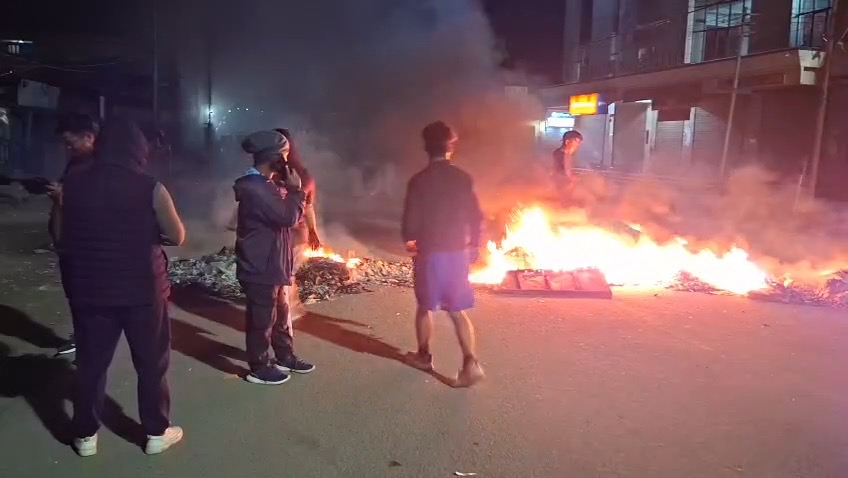
In today’s world, seeing has become believing. One of the most concerning realities of modern society is the manner in which fake propaganda circulating on social media is readily accepted as truth by people who are deeply influenced by digital platforms.
Unlike the 1990s, information today is accessible to almost every smartphone user and can spread across communities within seconds. The number of people who believe information simply because they see it online is far greater than those who take the effort to verify its authenticity.
Such fake narratives and propaganda not only create confusion among the public but also sow seeds of hatred, mistrust, and misunderstanding within society.
The Conspiracy Behind the Killing of Three Pastors:
On 13 May 2026, three Kuki church workers, while returning from Churachandpur to Kangpokpi District, were ambushed near Kotjim at close range by the NSCN-IM through its proxy group, the ZUF(K).
Shortly after the incident, condemnations from various organisations and associations flooded social media. One such statement came from the ZUF, which blamed the NSCN-IM for the killings, while the NSCN-IM, in contrast, denied any involvement.
In circumstances where no organisation officially accepted responsibility for the killings, members of the Thadou Innpi Manipur — described by critics as a self-styled and unauthorised organisation led by anti-Kuki figures such as Lamjathang Haokip and James Haokip — began advancing their own narrative surrounding the incident.
According to critics, Lamjathang Haokip, in an attempt to seek favour among Meitei circles while distancing himself from the Kuki community, started feeding the public with a self-created narrative to strengthen his influence among anti-Kuki groups.
Lamjathang categorically alleged that Kuki militants were behind the incident and claimed that the attack was pre-planned. Critics argue that such statements not only added fuel to an already volatile atmosphere but further intensified tensions on the ground.
Nothing, critics say, substantiates Lamjathang’s claims more than what they describe as his own propaganda. He attempted to play the “Thadou card” despite the widely accepted understanding that the Thadou are historically part of the larger Kuki community.
This raises serious questions regarding the real perpetrators behind the killings. Many argue that there is little logical basis to believe that a group would target members of its own community while armed organisations continue blaming one another. From this perspective, suspicion has largely fallen on the ZUF(K), whose alleged involvement in violent incidents in those areas has reportedly been witnessed in the past.
The Propagation of Misinformation:
Recent events have once again exposed the extent to which social media influences
communities when fake news is widely circulated. The more misinformation spreads, the more authentic it begins to appear. Many users rarely take time to verify the credibility of the information they receive and instead choose to believe whatever reaches them first. This blind acceptance has caused more damage than good.
For instance, media houses are often criticised for providing platforms to controversial and self-styled figures such as Lamjathang Haokip. When individuals accused of spreading divisive narratives are given space to shape public opinion, society can hardly expect positive outcomes. The media has a far greater responsibility to create an atmosphere of peace, truth, and reconciliation.
At the same time, unnecessary poster campaigns spreading unverified content have become equally dangerous. While controlling such practices in the digital era may be difficult, the inaction of concerned authorities in monitoring misinformation often adds more fuel to the fire.
Similar patterns were witnessed during the early stages of the Meitei–Kuki conflict.
With social media becoming an unstoppable platform where fake news is easily consumed, it is important for community CSOs to educate the public on the dangers of believing unverified information. In this context, the recent press statement issued by the United Naga Council (UNC) has also raised concerns. Critics argue that several accusations contained in the statement appeared to rely on unverified claims and narratives publicly advanced by Lamjathang during television discussions. Regrettably, such prompt statements from a mature organisation like the UNC, based on unverified information, not only damage its own credibility but also raise concerns regarding the intention behind the statement itself.
The Growing Trust Deficit:
The consequences of the killing of the three pastors have placed innocent civilian lives at risk. The hostage-taking incidents that followed, with both sides reportedly detaining and later exchanging civilians based on equal numbers, have only deepened public concern.
Following pressure from all communities, the government initiated efforts to secure the safe release of the hostages. However, with the “number game” continuing, the situation became increasingly complicated. Although 14 individuals from each side were eventually released, another 14 people — including three Kuki-Zo students — are reportedly still being held hostage by the SDSA and its associates.
With each passing day, emotions among both communities continue to intensify as the hostage situation drags on. Several CSOs have attempted to mediate and resolve the matter, yet no concrete breakthrough has been achieved so far due to the growing trust deficit between the two sides. This remains an alarming situation where the collapse of trust could ultimately lead to unprecedented incidents that are neither necessary nor called for.
Meanwhile, despite mounting pressure, government agencies tasked with carrying out fair and unbiased monitoring between the two communities have instead conducted extensive combing operations in Kuki-inhabited areas, despite the community itself suffering casualties from the violence. Critics argue that instead of prioritising efforts to secure the release of the remaining 14 hostages reportedly under the custody of the SDSA — described as a student body and a proxy of the NSCN-IM — authorities have focused on selective operations. Such actions, according to observers, speak volumes about how victims in Manipur are often used as tools for propaganda and narratives of misconduct.
Conclusion:
Manipur has endured years of unrest and instability, and the time has come to look beyond conflict toward a future built on peaceful coexistence.
The government of the day must proactively fulfil its responsibilities without undermining the lives and concerns of any community while ensuring a fair and impartial process for the release of all hostages.
From media institutions to ordinary social media users, there is also a collective responsibility to rely on verified facts rather than narratives driven by rhetoric and misinformation spread by controversial individuals.
Above all, this is a time to rebuild trust and pursue reconciliation rather than allowing tensions to escalate further — something the people of Manipur have already suffered through for far too long.
(Views expressed are personal)


The Hills Journal
K. Salbung, Churachandpur
Manipur-795128