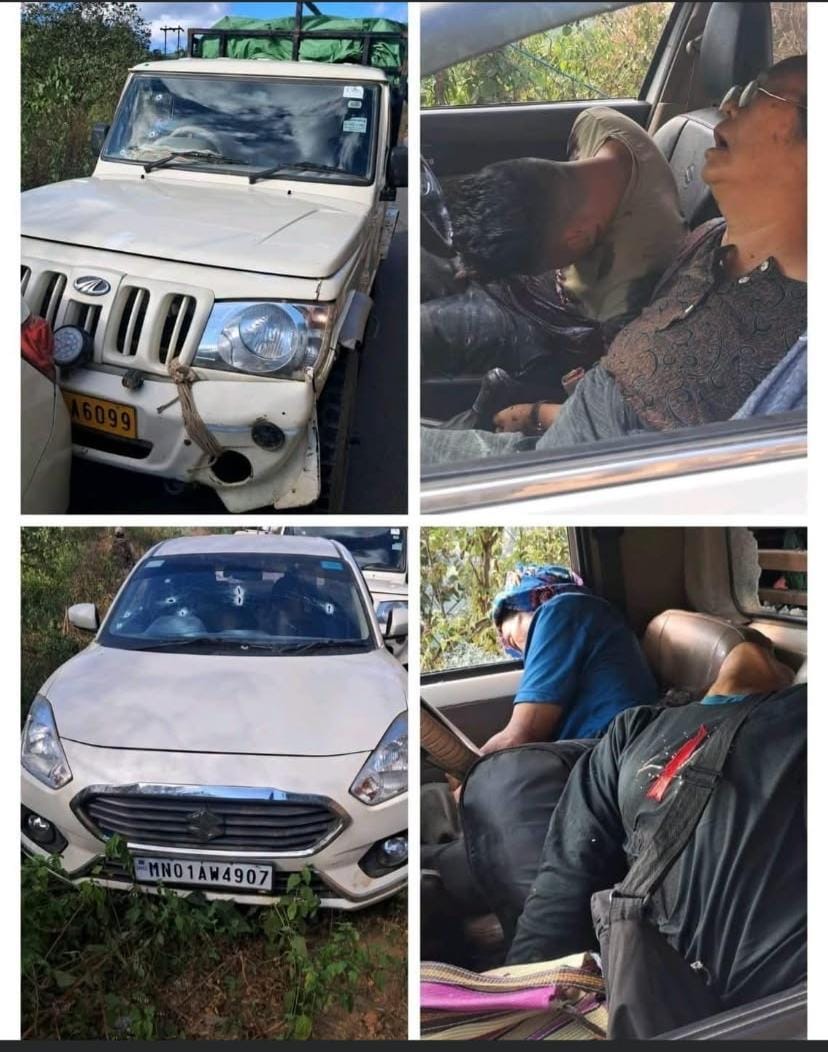
The Working Committee Kuki CSOs Ukhrul strongly condemned the killing of four civilians in an ambush near New Heaven in Manipur, and categorically denied any Kuki-Zo involvement in the attack and cautioned against attempts to impose collective blame or initiate selective security operations against Kuki-Zo inhabited areas.
In separate statements the Kuki Inpi Manipur raised serious concerns over what they described as discriminatory security practices and ethnic bias in the conduct and public communication of Manipur Police.
The WCKCSOs-Ukhrul condemned the reported ambush on two civilian vehicles travelling from Ukhrul towards Imphal between 1.30 pm and 2 pm, in which four civilians, including a woman and three men, were brutally killed. Expressing profound grief over the loss of innocent lives, the organisation extended condolences to the bereaved families and reiterated that the killing of civilians, irrespective of community or identity, must be unequivocally condemned.
However, the committee categorically denied any Kuki-Zo involvement in the New Heaven ambush, rejecting attempts to implicate the community without credible and verifiable evidence. It cautioned that the tragedy must not be exploited to manufacture communal narratives, assign collective responsibility or justify action against an innocent community.
Raising questions over the circumstances surrounding the attack, WCKCSOs-Ukhrul said the timing of the ambush, particularly in relation to reported security escort arrangements for civilian convoys from 2 pm onwards, warranted serious scrutiny.
It called for a thorough investigation into the identity, motive and possible affiliations of the perpetrators, including any potential connection with the ongoing internal conflict involving NSCN factions, asserting that responsibility must be established through evidence rather than assumptions or convenient communal attribution.
The committee also expressed grave apprehension that the incident could be used as a pretext for searches, detentions, intimidation or security operations in Kuki-Zo inhabited areas.
Rejecting any selective or retaliatory action against Kuki-Zo villages and civilians, it cited what it described as glaring disparities in the security response to previous incidents, including the Chassad massacre, in which Kuki-Zo civilians were killed and houses burnt.
Demanding an impartial and time-bound investigation, WCKCSOs-Ukhrul called for an unequivocal assurance against collective blame and selective security operations, besides insisting on equal and non-discriminatory security measures and accountability for all communities.
Meanwhile, Kuki Inpi Manipur launched a scathing attack on Manipur Police, accusing the force of blatant double standards, ethnic prejudice and selective reporting in its official statements concerning two separate shooting incidents on November 12.
KIM alleged that Manipur Police had displayed a glaring disparity in its treatment of Kuki and Tangkhul Naga victims through two statements published within minutes of each other on its official X handle and circulated through its official WhatsApp channels and Facebook pages.
According to KIM, the police described the killing of Kimneineng Chongloi (40), a Kuki woman who was harvesting paddy, and the injuries sustained by two other Kuki civilians merely as a "firing incident", without identifying or characterising the perpetrators.
Taking strong exception to the terminology, the organisation questioned whether the murdered woman was exchanging gunfire with her attackers or firing bullets from her sickle.
In contrast, Kuki Inpi alleged that in a separate statement concerning a Tangkhul Naga civilian who sustained a bullet injury, Manipur Police readily described the attackers as "suspected Kuki armed miscreants".
Questioning the evidentiary basis of the police's identification, the organisation asked whether the alleged attackers had been identified or arrested and whether there was any credible evidence linking them to the Kuki community.
Kuki Inpi maintained that the alleged inconsistency was not an isolated occurrence, accusing Manipur Police of repeatedly engaging in selective reporting and ethnic profiling since May 3, 2023, portraying Kukis as aggressors while allegedly downplaying violence and suffering inflicted upon the community.
Describing Manipur Police as a constitutional institution rather than a propaganda machinery, Kuki Inpi said selectively assigning ethnic identities to alleged perpetrators while describing the killing of Kuki civilians in anonymous terms raised serious questions about the force's impartiality and its constitutional obligations under Article 14.
The organisation subsequently issued a four-point demand, seeking an immediate internal investigation to identify the officers responsible for drafting, approving and circulating the two statements; a public explanation for the inconsistent reporting and disclosure of the evidentiary basis for identifying the alleged attackers as Kukis; corrective action, including disciplinary proceedings against personnel found responsible for deliberate misrepresentation or discriminatory reporting; and a formal assurance from the Director General of Police, Manipur, that future police communications would adhere to uniform, impartial and evidence-based standards.
In a significant escalation, Kuki Inpi gave Manipur Police 72 hours to issue a satisfactory clarification and initiate corrective action.
Warning of further action in the event of non-compliance, the organisation said it would be compelled to pursue legal and constitutional remedies, including suspension of cooperation with Manipur Police within Kuki areas.
Both organisations maintained that accountability for civilian killings must be pursued without discrimination, warning against attempts to exploit tragic incidents to deepen existing ethnic divisions or subject an entire community to collective punishment.