
Kukis Claim Heavier Toll in Recent Cycle of Violence; 12 Deaths in Four Months
Observers note that the continuing cycle of violence is deepening mistrust between two communities that have historically coexisted for generations.
The unconditional release of 14 Kuki hostages by Naga civil society groups on June 9 has been widely welcomed as a positive humanitarian gesture amid ongoing tensions between Kuki and Naga communities in Manipur. However, the violence has extracted a heavier toll on the Kuki community, with at least 12 Kuki lives reportedly lost over the past four months in separate incidents involving Naga militant groups.
While the release of the hostages has been hailed as a confidence-building measure, the focus should not be limited to the captivity and release of civilians but also extend to the numerous killings that have occurred during the ongoing conflict.
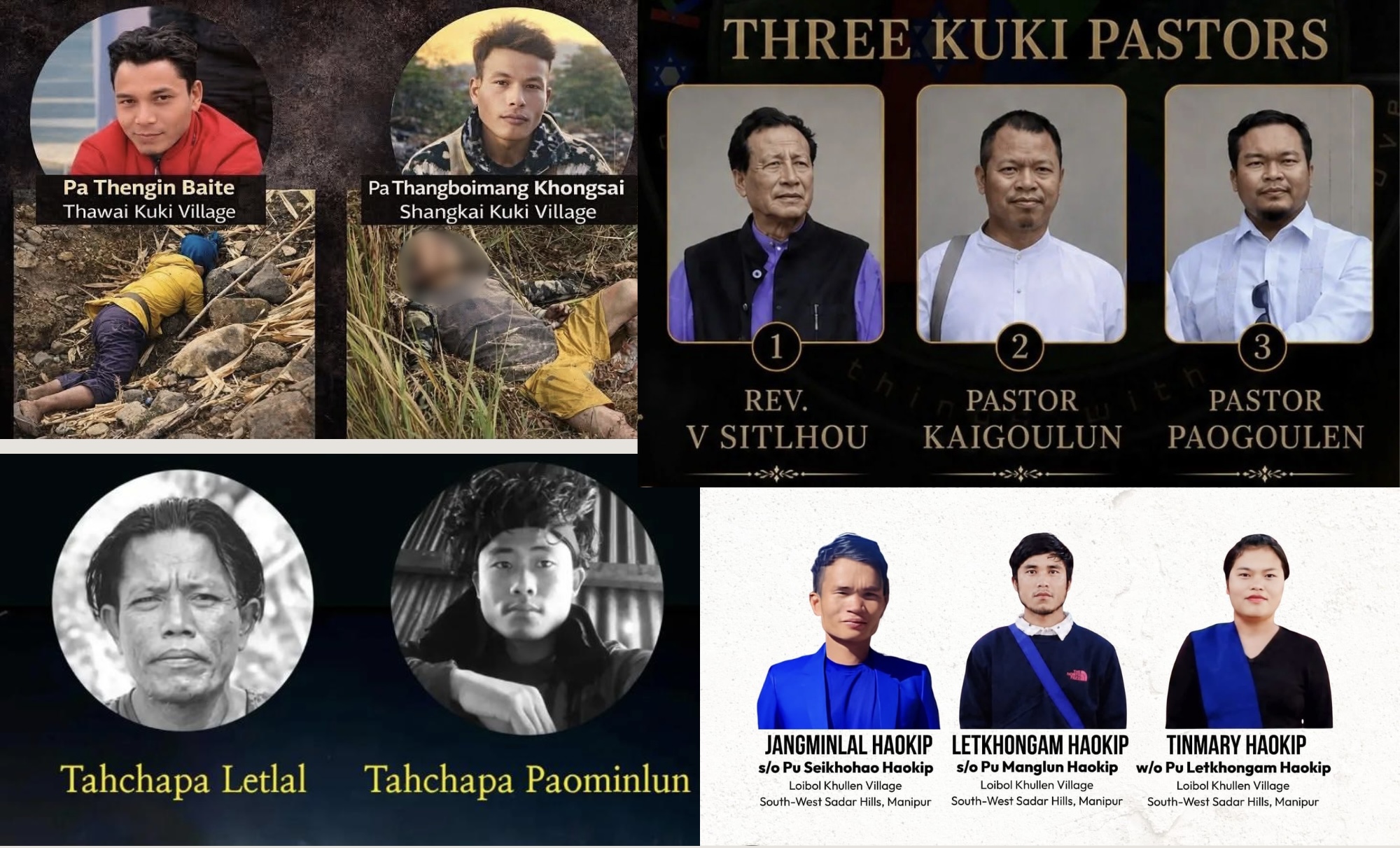
According to accounts compiled from various incidents since March 2026, at least 12 Kukis, including an unborn child, have been killed in separate attacks across several locations including Litan, Mulam-Shongphel, the Kotzim-Kotlen route, Loibol Khullen, and Lasan. In addition to the fatalities, several houses in Kuki villages were reportedly set ablaze during attacks.
The repeated incidents have generated fear and insecurity among Kuki villages in the hill districts. At the same time, the Naga communities have also suffered casualties, with reports indicating that six Naga individuals lost their lives during the same period.
Observers note that the continuing cycle of violence is deepening mistrust between two communities that have historically coexisted for generations.
Release of Hostages
The release of 14 Kuki hostages by the United Naga Council (UNC) and associated civil society organisations on June 9 was welcomed by many quarters as a humanitarian step. However, Kuki groups pointed out that a similar gesture had earlier been initiated by their side.
On March 12, 2026, the Kuki Inpi Manipur (KIM) facilitated the unconditional release of 21 hostages, including 18 Tangkhul civilians and three individuals belonging to neutral communities. The release was carried out amid heightened tensions as a goodwill measure aimed at reducing hostilities.
It must be noted that instead of a reciprocal humanitarian gesture at that time, the mortal remains of two Kuki villagers—Late Thenkhogin Baite and Late Thangboimang Lunkim—were handed over through the Tangkhul Naga Long (TNL).
The Kukis therefore view the June 9 release of 14 Kuki hostages as a delayed reciprocation of the goodwill initiative undertaken by KIM in March.
The recovery of six mortal remains of Naga individuals by Manipur Police on June 10, 2026 has also raised questions regarding the deep trust deficit that continues to exist between the communities despite efforts toward reconciliation.
Chronology of Reported Killings
According to records cited by various Kuki organisations, the first major incident occurred on March 11, 2026, when Thangboimang Khongsai of Shangkai Kuki Village and Thengin Baite of Thawai Kuki Village were reportedly killed. Their bodies were recovered the following day, March 12. The two men had gone to repair a village water pipeline. Their deaths coincided with the period during which 21 Naga hostages were released by Kuki groups as a gesture of goodwill.
On April 24, village volunteers Letlal Sithlou and Paominlun Haolai were reportedly ambushed and killed between Mulam and Songphel villages in Ukhrul district. Kuki CSOs Working Committee Ukhrul have alleged that Tangkhul militants were responsible for the attack.
Another incident involved the killing of three Kuki church leaders—Rev. V. Sithlou, Pastor Paogoulen, and Rev. Kaigoulen—who were ambushed along the Kotzim-Kotlen route on May 13, 2026. The attack was attributed by Kuki groups to the ZUF Kamson faction.
The deadliest incident occurred on June 5 at Loibol Khullen village, where Jangminlal Haokip, Letkhongam Haokip, Tinmary Haokip, and an unborn child of seven months reportedly lost their lives. Kuki organisations alleged that the attack was carried out by the ZUF Kamson group, which they describe as a proxy of the NSCN-IM.
In the latest reported incident, Haokhogin Lhouvum of Lasan village was allegedly killed by Naga militants on June 9 in Twilang area.
Calls for Lasting Peace
While welcoming the release of hostages, true reconciliation cannot be achieved solely through the return of abducted civilians.
Releasing civilians who should never have been abducted in the first place is not an act of extraordinary virtue—it is the minimum expected of any society that upholds humanitarian values.
With both communities having suffered losses, a called for dialogue, accountability, and confidence-building measures to prevent further bloodshed and restore peace in the hill districts is the need of the hour.
The latest developments have once again highlighted the urgent need for a sustainable resolution to the growing tensions, as residents on both sides continue to live under the shadow of violence and uncertainty.


The Hills Journal
K. Salbung, Churachandpur
Manipur-795128