
Editorial || The Biren Case in the Supreme Court: Forensic Truth, Political Complicity, and the Limits of Power
Reports suggest he has been unsettled by the convergence of scientific findings and judicial scrutiny.
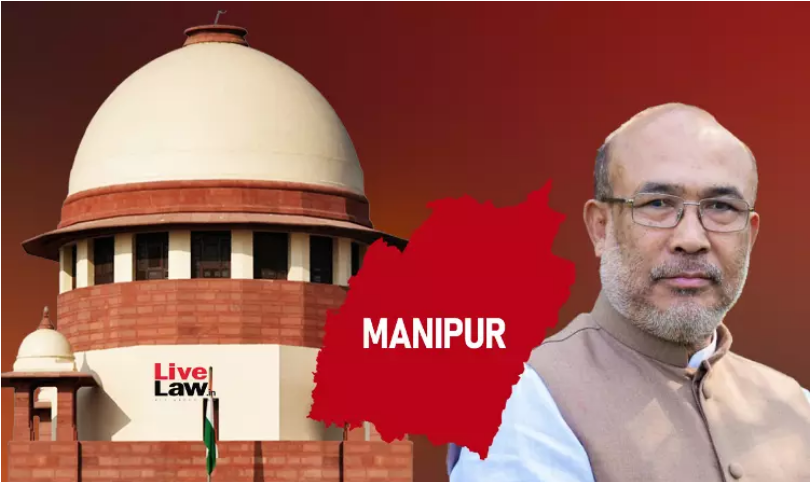
The legal proceedings involving N. Biren Singh, former Chief Minister of Manipur, have taken a dramatic turn before the Supreme Court of India. Central to the matter are viral audio recordings in which Biren is alleged to have issued instructions linked to communal mobilisation, ethnic persecution, and organised violence. The controversy has moved beyond the realm of politics into the heart of India’s constitutional democracy, where the judiciary is called upon to confront the question of accountability for state-sponsored ethnic cleansing.
The first major forensic development came with the report of Truth Lab, a well-regarded private forensic agency. Its analysis was decisive: with 93 percent certainty, the voice in the audio recordings matched that of N. Biren Singh. The report further confirmed that the material showed no signs of tampering or manipulation that could discredit its authenticity. This categorical finding strengthened suspicions that Biren was directly involved in directing and encouraging acts of violence. More importantly, it fit seamlessly with other evidence such as digital communications, witness testimonies, and documentary records, all of which collectively portrayed Biren not as a passive political head but as an active orchestrator.
Following this, the Central Forensic Science Laboratory (CFSL) was tasked with examining the same material. Its findings, however, proved far more ambiguous. The CFSL acknowledged that the voice in the recordings bore strong resemblance to Biren Singh but declined to authenticate the recordings fully, claiming that the tapes were “tampered.” This equivocation generated widespread scepticism about the laboratory’s neutrality, particularly in light of the political stakes involved. The Supreme Court, noting these concerns, outright rejected the CFSL’s report in its earlier hearings. The bench observed that the analysis lacked credibility and could not be relied upon to arrive at the truth.
As the contradictions between the Truth Lab’s categorical findings and the CFSL’s evasive position became evident, the Court decided to direct the National Forensic Sciences University (NFSU) in Ahmedabad, Gujarat, to carry out a thorough re-examination. This move was welcomed by legal observers as a bid to place the issue in the hands of an institution that could act independently and resist external pressures. The Court’s insistence on a fresh inquiry underscored its resolve to arrive at an unimpeachable conclusion, free from political manipulation or institutional compromise.
Meanwhile, the broader implications of the case were becoming clear. The evidence does not point to Biren Singh in isolation but indicates a wider network of complicity. Radical outfits such as Arambai Tenggol and Meitei Leepun, together with the Inner Manipur MP in the Rajya Sabha, are alleged to have been central actors in fostering hatred, spreading inflammatory propaganda, and mobilising violence against minority communities. Their actions, taken in concert with Biren’s leadership, reveal a deliberate strategy of ethnic persecution and political consolidation through coercion.
The hearings before the Supreme Court also witnessed an unusual intervention. Biren Singh’s daughter submitted an application requesting the Court’s permission to be made a party to the case. The Court dismissed the plea in unequivocal terms, declaring that the proceedings were not a “family programme” but a matter of grave public concern with constitutional consequences. This rejection not only underscored the seriousness of the case but also reflected the Court’s unwillingness to allow diversions or personal appeals to dilute its central focus on truth and accountability.
For Biren Singh, these developments have marked an intensifying legal and political crisis. Reports suggest he has been unsettled by the convergence of scientific findings and judicial scrutiny. Yet, in public, he continues to project defiance. In his recent interview with The Lungleng, he presented himself as a victim of political conspiracy, dismissing the charges against him while attempting to retain political relevance. Critics, however, interpret these postures as signs of a ruthless and unrepentant leader, one who remains willing to sacrifice social peace and countless lives in order to cling to the spotlight and to power.
The significance of the Biren case extends far beyond the courtroom. For the victims of Manipur’s violence, the proceedings represent a chance at justice long denied. The confirmation of Biren’s role by scientific evidence such as the Truth Lab report is not merely incriminating; it symbolises an acknowledgement of the suffering inflicted upon entire communities. Establishing his culpability would mean more than punishment. It would affirm, in unmistakable terms, the principle that state authority cannot be misused to legitimise persecution and hatred. It would send a message that no political office, however powerful, gives licence to destroy the lives and dignity of vulnerable communities.
The broader peace of Manipur also hinges on the outcome. A society fractured by deep ethnic divides cannot heal unless those who engineered and exploited such divisions are held accountable. Without justice, appeals to reconciliation and peace risk sounding hollow. By insisting on forensic rigour and refusing to accept compromised or politically tainted reports, the Supreme Court has sought to rebuild public trust and demonstrate that constitutional principles remain intact.
The Biren case is thus a decisive test for Indian democracy. The Truth Lab’s 93 percent confirmation stands as a scientific indictment of a powerful political figure, supplementing a growing body of evidence that portrays him as the principal actor behind ethnic violence. The CFSL’s equivocation and the Court’s rejection of it only highlight the risks of institutional compromise when politics interferes with science. Now, with the NFSU tasked to conduct its own comprehensive re-examination, the legal process approaches a decisive moment.
For victims, the case holds the promise of long-awaited recognition. For Manipur, it offers a pathway toward healing through truth and accountability. For India’s judiciary, it is a test of whether law can stand firm against the corrosive pressures of political expediency. Whatever the final forensic confirmation, one fact is increasingly inescapable: N. Biren Singh has been cornered by converging evidence and cannot escape the tide of justice much longer.



The Hills Journal
K. Salbung, Churachandpur
Manipur-795128