
Fresh Bloodshed Reopens Kuki-Zo’s Three-Decade-Old ‘Unhealed Wounds’ as Community Marks ‘Sahnit Ni’
“Sahnit Ni is not merely a day of mourning. It is a solemn reminder of the lives lost, families destroyed and communities displaced.”
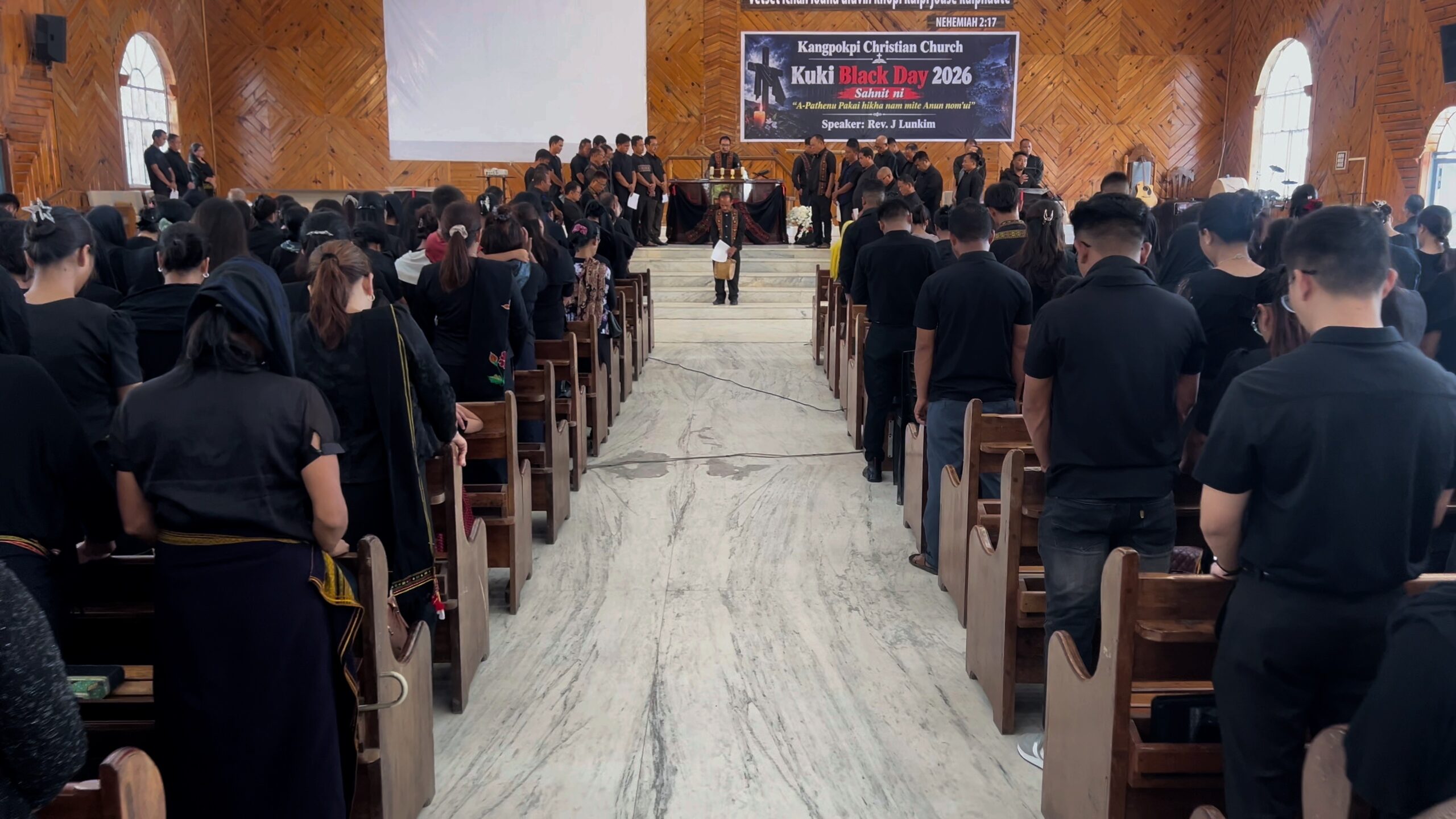
Fresh bloodshed in Tamenglong on Saturday cast a grim shadow over the annual observance of ‘Sahnit Ni’ or Kuki Black Day in Kangpokpi, as the Kuki-Zo community turned back to the painful memories of the 1990s Kuki-Naga conflict and mourned those killed in the violence.
The killing of a Kuki-Zo family in Tollen village under Tousem sub-division of Tamenglong district, allegedly by cadres of the NSCN-IM, on the eve of the community’s annual remembrance day has reopened what community leaders described as three-decade-old “unhealed wounds”.
A woman was allegedly shot dead inside her house while her husband later succumbed to bullet injuries in hospital and their six-year-old son sustained a gunshot injury to his hand, according to local accounts.
The deceased were identified as Lhingjangai Singsit and Seipeh Singsit, while their minor son, Henminsang Singsit, is undergoing treatment in a hospital.
The fresh incident lent a sombre and deeply emotional tone to this year’s Sahnit Ni observance, with Kuki-Zo households across Kangpokpi town and villages hoisting black flags and residents wearing black as a mark of mourning.
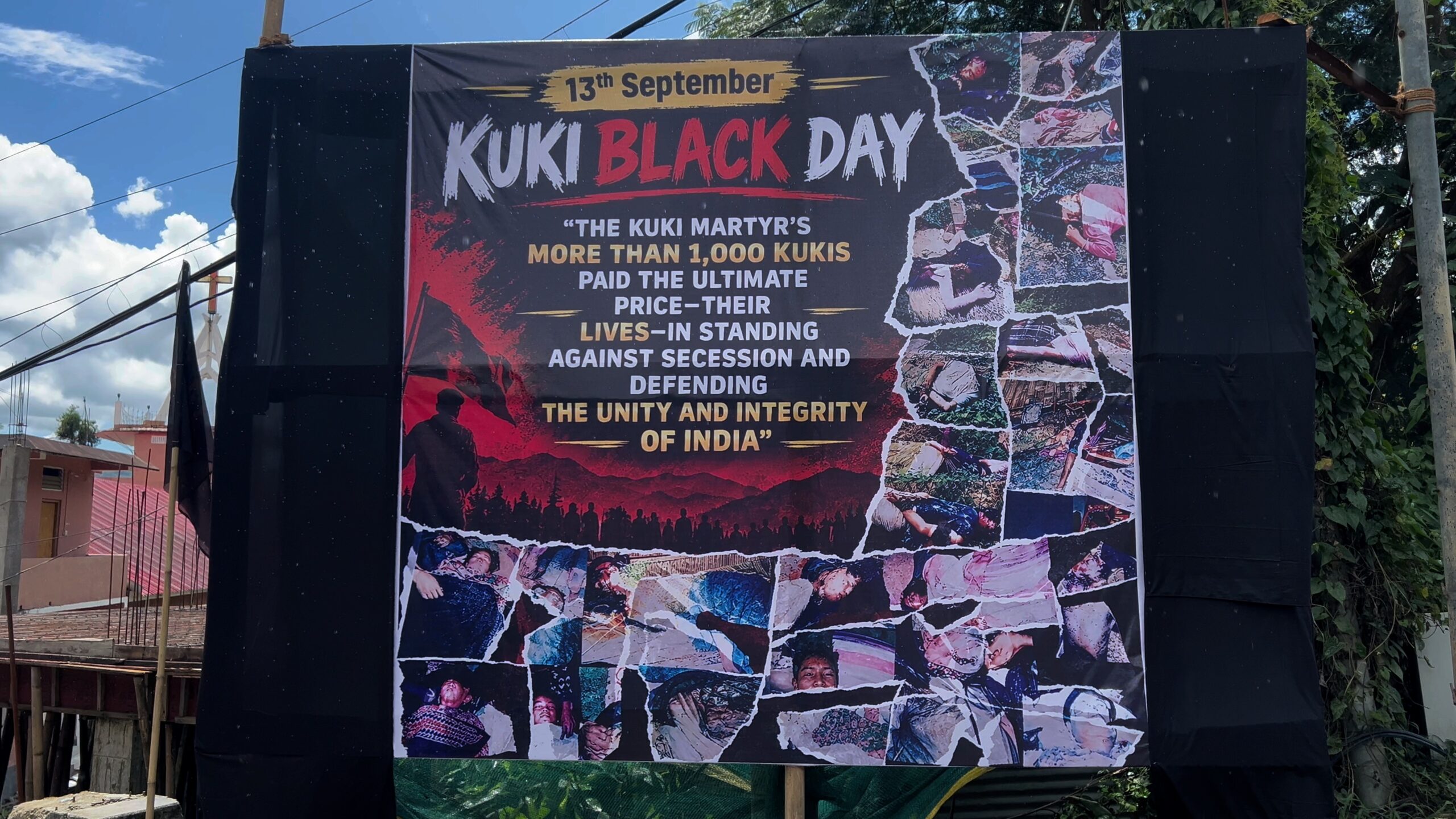
A giant banner carrying the words “Kuki Black Day” was put up along National Highway-2, while black flags were seen fluttering from poles and posts across the town.
The main observance was held at the Kangpokpi Christian Church, where hundreds of people, dressed in black, gathered for a solemn condolence and prayer service.
The programme included prayers for the departed souls, appeals for justice and peace, and prayers that such violence and what the community describes as ethnic cleansing should never recur.
A condolence service was led by Dr Hemkhochon Chongloi, while Rev J Lunkim addressed the gathering.
The observance assumes particular significance for the Kuki community as September 13 is associated with the killings during the Kuki-Naga conflict of the 1990s, particularly the 1993 Joupi massacre and other attacks in which more than 100 Kuki civilians were killed on September 13, 1993, according to historical accounts and Kuki community records.
The Kuki community has since observed September 13 as Sahnit Ni, or Black Day, as a day of mourning and remembrance for victims of the conflict and as a platform to demand justice.
Community representatives claim that the wider violence between 1992 and 1997 left more than 1,000 Kukis dead, over 360 villages uprooted and more than one lakh people displaced. These figures have been repeatedly cited by Kuki organisations, though accounts of the conflict and its casualties vary among sources.
Boipu Khongsai, a Church executive, said Sahnit Ni would continue to be observed every September 13 until the Government of India addressed the community’s demand for justice for those killed during the conflict.
He recalled that quit notices were issued to Kuki villagers in areas claimed under the Naga territorial aspiration of Greater Nagalim and that disputes over land, taxation and competing territorial claims eventually escalated into widespread violence.
“September 13 is remembered as one of the darkest days in the history of the Kuki people,” he said, adding that the community continued to seek justice for the victims and recognition of their suffering.
According to Kuki community accounts, the September 13, 1993 killings involved armed Naga groups, including cadres attributed by the community to the NSCN-IM. Historical accounts also record the wider Kuki-Naga conflict as having involved violence and displacement on both sides.
Boipu further said that the community’s wounds had been compounded by the violence since May 2023, claiming that more than 300 Kuki civilians had been killed in the ongoing conflict involving Meitei and Naga actors.
He said the victims included three Kuki pastors who, according to him, had advocated peace.
“Sahnit Ni is not merely a day of mourning. It is a solemn reminder of the lives lost, families destroyed and communities displaced,” he said.
The day was observed through black flags, black attire and church prayers, with participants praying for the souls of the victims, justice for survivors and lasting peace.
But this year, the observance carried an additional and painful message: that three decades after the bloodshed that gave birth to Sahnit Ni, the community says it is once again confronting violence against civilians.
For the Kuki-Zo community, the fresh killings have therefore transformed this year's Black Day from a remembrance of a distant tragedy into a stark reminder of wounds it says have never truly healed.



The Hills Journal
K. Salbung, Churachandpur
Manipur-795128