
NPP: A Beacon of Hope for the Northeast or a Device of the Centre?
Is the NPP truly an independent regional platform, or is it functioning as a calibrated political device aligned with the Centre, particularly the BJP?
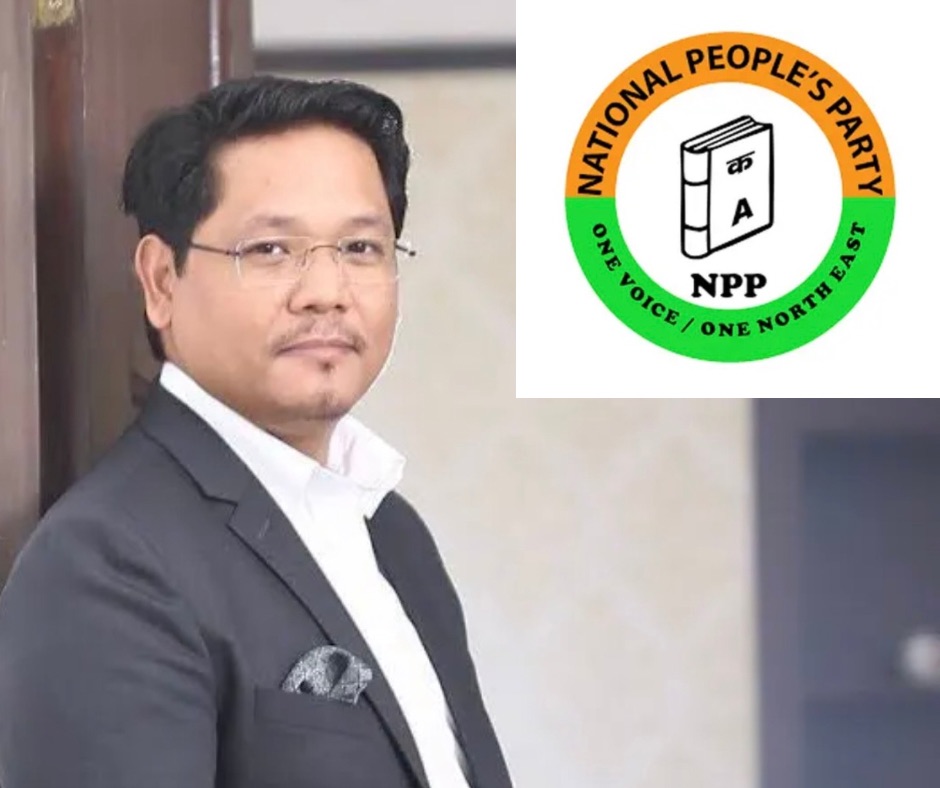
In the ever-evolving political landscape of Northeast India, few parties have generated as much debate in recent years as the National People’s Party (NPP). Under the leadership of Meghalaya Chief Minister Conrad Sangma, the NPP has positioned itself as a regional force committed to unifying the voice of the Northeast. Yet, a persistent question lingers in political circles and among the public alike: Is the NPP truly an independent regional platform, or is it functioning as a calibrated political device aligned with the Centre, particularly the BJP?
The Rajdeep Sardesai Episode and the CAA Shadow
The debate resurfaced prominently during a televised exchange when senior journalist Rajdeep Sardesai questioned Conrad Sangma regarding the implementation of the Citizenship (Amendment) Bill (CAB) in 2019. Sardesai referred to an earlier moment suggesting that Assam Chief Minister Himanta Biswa Sarma, the convenor of the North East Democratic Alliance (NEDA), appeared politically satisfied as the NPP found itself within the BJP-led alliance framework.
The symbolism of that moment was significant. NEDA, which functions as a coalition of BJP and allied parties in the Northeast, has often been perceived as the institutional mechanism through which the Centre consolidates political influence across the region. The fact that the NPP operates within this alliance structure inevitably fuels questions about its autonomy.
Back in 2019, when the Citizenship (Amendment) Bill faced widespread protests across the Northeast, Conrad Sangma publicly declared that the NPP would oppose the Bill. He was even seen as instrumental in bringing together regional parties to voice collective resistance. However, when the Bill came up for voting in Parliament, the lone NPP Lok Sabha MP at the time, Agatha Sangma, voted in favor of it. The Bill subsequently became law.
This apparent contradiction between rhetoric and parliamentary action continues to haunt the party’s credibility among critics. After the passage of the Act, public opposition from the NPP leadership appeared to soften, raising suspicions about whether political pragmatism had overtaken principle.
Championing Northeast Identity
Despite such criticisms, Conrad Sangma has repeatedly sought to portray himself as a defender of Northeast identity and dignity. Recently, following reports of racial abuse faced by three women from Arunachal Pradesh residing in Malviya Nagar, Delhi, Sangma took a firm public stand condemning the incident. The women had reportedly been subjected to racial slurs by neighbors after a dispute over an air-conditioner installation.
Social media reactions praised Sangma’s intervention, with some users contrasting his vocal stance with the relatively restrained responses of Arunachal Pradesh Chief Minister Pema Khandu and Union Minister Kiren Rijiju, both widely regarded as prominent BJP leaders from the Northeast.
In recent months, Sangma has also articulated the slogan “One Voice, One Northeast,” particularly in the context of the upcoming Assam Legislative Assembly elections. His outreach extends beyond Meghalaya. He has engaged with Pradyot Bikram Manikya Debbarma, founder of the Tipra Motha Party in Tripura, signaling an attempt to create a broader regional coalition.
Simultaneously, the NPP has expanded its ranks by inducting prominent leaders from across the Northeast:
Daniel Langthasa, a young leader from Dima Hasao and former Congressman.
Mmhonlumo Kikon, noted poet, author, and former BJP minister from Nagaland, now appointed as General Secretary (Political).
Irengmbam Hemochandra, former Speaker of the Manipur Legislative Assembly and ex-Congress leader.
The pattern suggests a deliberate strategy: to consolidate influential leaders who command grassroots support across ethnic and state boundaries. By doing so, the NPP appears to be constructing a pan-Northeast platform that transcends state-specific politics.
The Paradox of Alliance Politics
Yet, the structural reality remains unchanged. The NPP continues to function within the broader NEDA alliance, under the convenorship of Himanta Biswa Sarma. It is also an ally of the BJP at the Centre.
Historically, the Sangma family itself has traversed national political spaces. Conrad Sangma and his father, the late P.A. Sangma, were once members of the Congress before the formation of the NPP. This history reflects a broader pattern of political mobility common in Indian regional politics, but it also complicates the narrative of ideological consistency.
Critics argue that many of the leaders recently inducted into the NPP are themselves former Congress or BJP members who parted ways with their previous parties due to internal dissatisfaction. However, by joining a party aligned with the BJP at the national level, are they truly stepping outside that political ecosystem? Or are they simply relocating within it?
For instance, Mmhonlumo Kikon reportedly resigned from the BJP citing lack of space for constructive opinion and concerns over the treatment of minority Christian groups in the region. Yet his subsequent induction into the NPP — a close BJP ally — has raised questions about whether substantive ideological distance truly exists between the two platforms.
Similarly, Daniel Langthasa and Irengbam Hemochandra, who once contested strongly against both the Congress and the BJP, now find themselves under the NPP umbrella. For observers, the situation appears paradoxical: does this represent a genuine regional consolidation, or merely a reconfiguration within the same broader power structure?
The Manipur Withdrawal: Principle or Strategy?
On November 17, 2024, the NPP officially withdrew support from the BJP-led government in Manipur, citing deep concern over ongoing ethnic violence and the killing of innocent civilians, including women and children. The move was presented as a moral and political stand in response to public outrage.
However, subsequent developments complicated the narrative. With the formation of a new political arrangement in Manipur, NPP legislator Khuraijam Loken Singh from Wangoi Assembly Constituency was granted a ministerial berth. This development reignited criticism that the party’s stance may have been more tactical than ideological.
Such episodes contribute to the perception of a party navigating carefully between moral positioning and political opportunity.
The Numbers and the Network
Currently, the NPP holds:
33 MLAs in Meghalaya
7 MLAs in Manipur
5 MLAs in Nagaland
1 MLA in Arunachal Pradesh
Collectively, these legislators operate within the broader framework of the North East Democratic Alliance under Himanta Biswa Sarma’s convenorship.
In practical terms, this places the NPP at the intersection of regional assertion and central alliance politics.
Beacon or Bridge?
The core question remains unresolved.
For supporters, the NPP represents a necessary regional counterweight within national politics — a bridge that ensures Northeast voices are heard at the Centre while safeguarding regional interests. In a fragmented political landscape, strategic alliance may be viewed not as surrender but as survival.
For critics, however, the party’s contradictions — from the CAA vote to shifting alliances in Manipur — suggest that it may function as a decentralized extension of central authority, consolidating regional leaders while maintaining alignment with national power.
Ultimately, the future of the NPP’s credibility will depend on how it navigates moments when regional sentiment sharply diverges from central policy. If it consistently prioritizes Northeast concerns even at political cost, it may solidify its image as a beacon of hope. If not, the suspicion that it operates as a device of the Centre will continue to shadow its rise.
(Views are personal)
The author is currently pursuing his Ph.D degree at Nagaland University.



The Hills Journal
K. Salbung, Churachandpur
Manipur-795128