
Muivah's Homecoming: The End of an Unfinished Dream
The homecoming of Th. Muivah, beyond its symbolic warmth and local celebration, marks the closing act of a long and turbulent chapter in the region’s history.
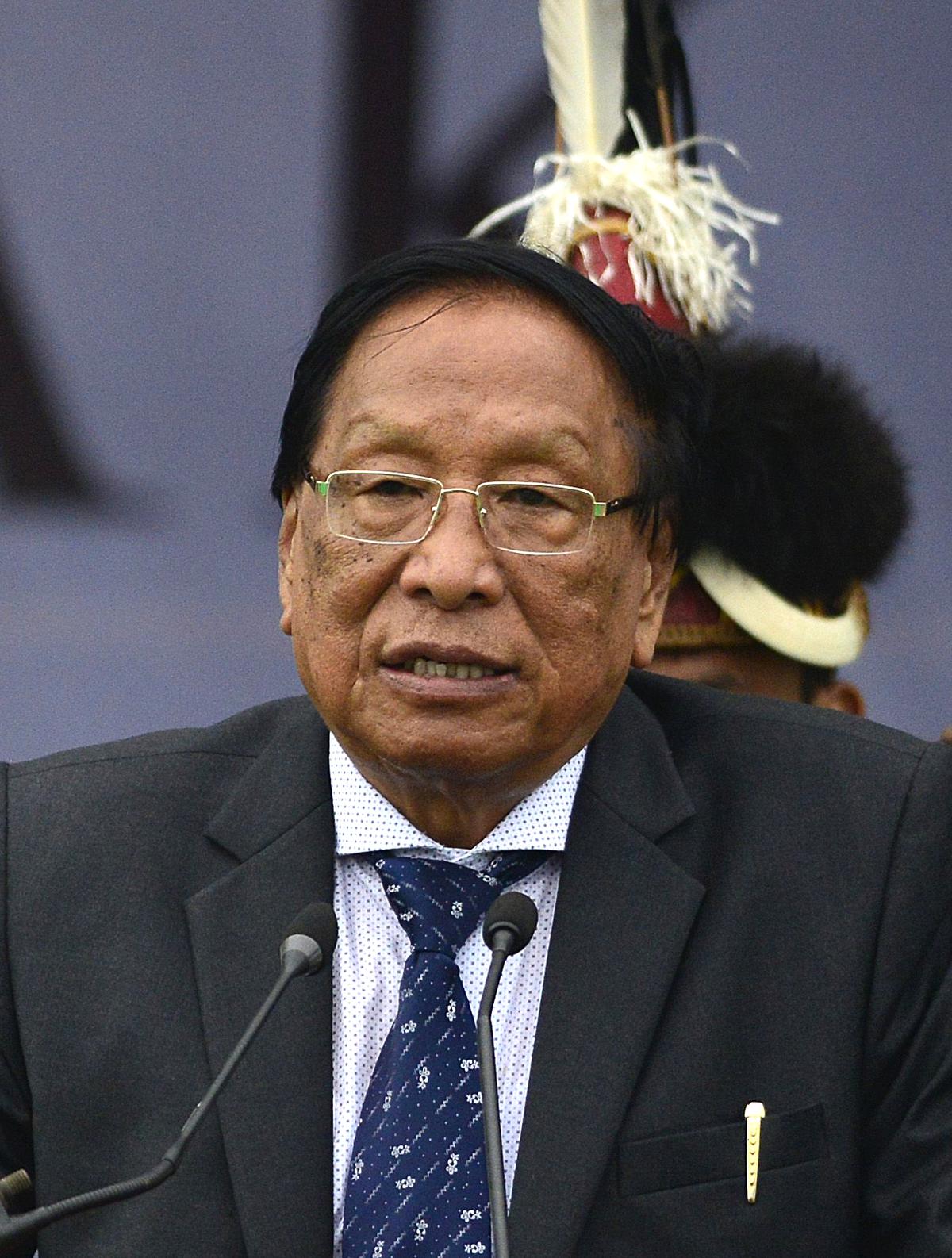
When Thuingaleng Muivah, the ageing Naga nationalist and long-time General Secretary of the National Socialist Council of Nagalim (Isak-Muivah), returned to his native Somdal village after nearly six decades, it stirred a mixture of nostalgia, reverence, and unease. For many within his own Tangkhul community, he was a beloved son coming home — the man who once carried their collective aspirations to the world stage. But for others, his return was a reminder of wounds that have yet to heal. It was an event heard across the hills, yet it moved few beyond them. The memories of his past mistakes — of blood, betrayal, and broken promises still echo in the valleys of Manipur and Nagaland.
The homecoming of Th. Muivah, beyond its symbolic warmth and local celebration, marks the closing act of a long and turbulent chapter in the region’s history. It is the end of an unfinished dream — a revolution that once spoke of freedom but left behind division; a leader who built an enduring legacy but also a landscape of loss.
For over half a century, Muivah’s political life revolved around two interwoven objectives. The overt mission, boldly declared to the world, was the creation of “Nagalim for Christ” — a sovereign Naga homeland rooted in faith and nationalism. Yet under Muivah’s reign, that vision was written not in salvation but in blood. The ideal of a spiritual and political nationhood became inseparable from coercion, violence, and internecine strife.
Beneath that overt cause lay a covert ambition: the consolidation of Tangkhul dominance within the Naga political framework. While the world saw a movement of collective liberation, insiders understood that Muivah’s strategic designs often served to elevate his own community’s position within Naga society. His authority was absolute, his loyalty unquestioned, and his intolerance towards dissent legendary.
Those who challenged his leadership — whether Naga bureaucrats, pastors, or thinkers — often paid with their lives. But it was the Kuki community that bore the heaviest price. The 1990s witnessed one of the darkest ethnic episodes in Northeast India’s modern history. More than 900 to 1,000 Kukis were massacred, entire villages erased, and ancestral lands seized. A century of coexistence between the Kukis and Nagas crumbled into horror. The bloodletting of that decade still haunts the hills of Manipur, where widows and orphans remember “Nagalim for Christ” as a slogan that brought only suffering.
The violence was not limited to ethnic lines. Within Naga society, any voice that questioned the NSCN (IM)’s centralised authority was silenced. The revolutionary ideal that once inspired thousands hardened into dogma. Liberation degenerated into domination, and faith became a political weapon.
Yet, despite the moral decay of the movement, Muivah’s endurance remained formidable. Through imprisonment, internal rifts, and international scrutiny, he survived — unbending and unrepentant. His covert goal, the political empowerment and consolidation of the Tangkhul elite, has been largely realised. But his overt dream, the promised sovereign Nagalim, now lies in political limbo — an echo of a bygone revolution.
The much-touted Framework Agreement of 2015, once hailed as a landmark achievement, has faded into bureaucratic stillness. The Government of India’s strategic patience has outlasted the insurgency’s zeal. Younger Nagas, shaped by global education and digital culture, no longer find inspiration in a movement that conflates nationalism with fear. The revolution that once claimed to be “for Christ” has lost its moral compass, its faithful replaced by the weary and disillusioned.
The Zaliangrong United Front (ZUF) recently issued a sharp statement calling upon the NSCN (IM) to “tender an unqualified public apology to the Naga people for its past mistakes and divisive politics.” The Front openly opposed Muivah’s visit, arguing that reconciliation without repentance is an illusion. They reminded the public that decades of internal killings, forced taxation, and ideological coercion cannot be forgotten under the banner of a homecoming. Their words resonated among many who have long awaited accountability from the movement that claimed to fight for them.
Equally telling was the muted response from the Meitei and Kuki communities. During Muivah’s first attempt to visit Manipur over a decade ago, both groups had vehemently opposed his entry — the Meiteis fearing a threat to Manipur’s territorial integrity, and the Kukis protesting the very man whose men had orchestrated their trauma. This time, however, there was no uproar, no protest. His arrival was met with quiet indifference. Perhaps it was not forgiveness, but fatigue — the realisation that Muivah’s power has waned, that his revolution has already spent its fire.
And yet, the embers of his politics still smoulder. Manipur, once a delicate mosaic of coexistence, continues to bear the burden of the divisions and distrust that took root under his leadership. The ethnic hostility, the armed exclusivism, the erosion of common belonging — all trace their origins to the political architecture he helped build. The dream of “Nagalim for Christ” promised redemption, but it left behind the ruins of reconciliation.
Th. Muivah’s return, therefore, is not a victory parade nor a tragic retreat. It is a reckoning. He comes home to the same hills that bore him, but to a land weary of the revolution he once personified. For his people, it is a moment of pride wrapped in pain — a homecoming that celebrates endurance while shadowed by guilt. For others, it is the closing scene of a story that forever altered Manipur’s soul.
His covert triumph — the consolidation of Tangkhul power and the reshaping of Naga politics — stands complete. But his overt dream, that of a sovereign “Nagalim for Christ,” remains unfulfilled and perhaps forever unreal.
Thus ends the unfinished dream. The man who once defied the Indian state and ruled the hills with fear and faith alike now returns to the soil of his birth — not as a conqueror, nor a defeated man, but as the embodiment of an unfinished revolution that devoured its own promise.
Th. Muivah’s story is not just about the rise and fall of a leader. It is the chronicle of a people’s struggle that sought salvation but found blood; of a revolution that began in faith and ended in fatigue. The dream has not died — it has simply lost its voice.
(Views expressed are personal)
The writer is a Social Activist based in New Delhi



The Hills Journal
K. Salbung, Churachandpur
Manipur-795128