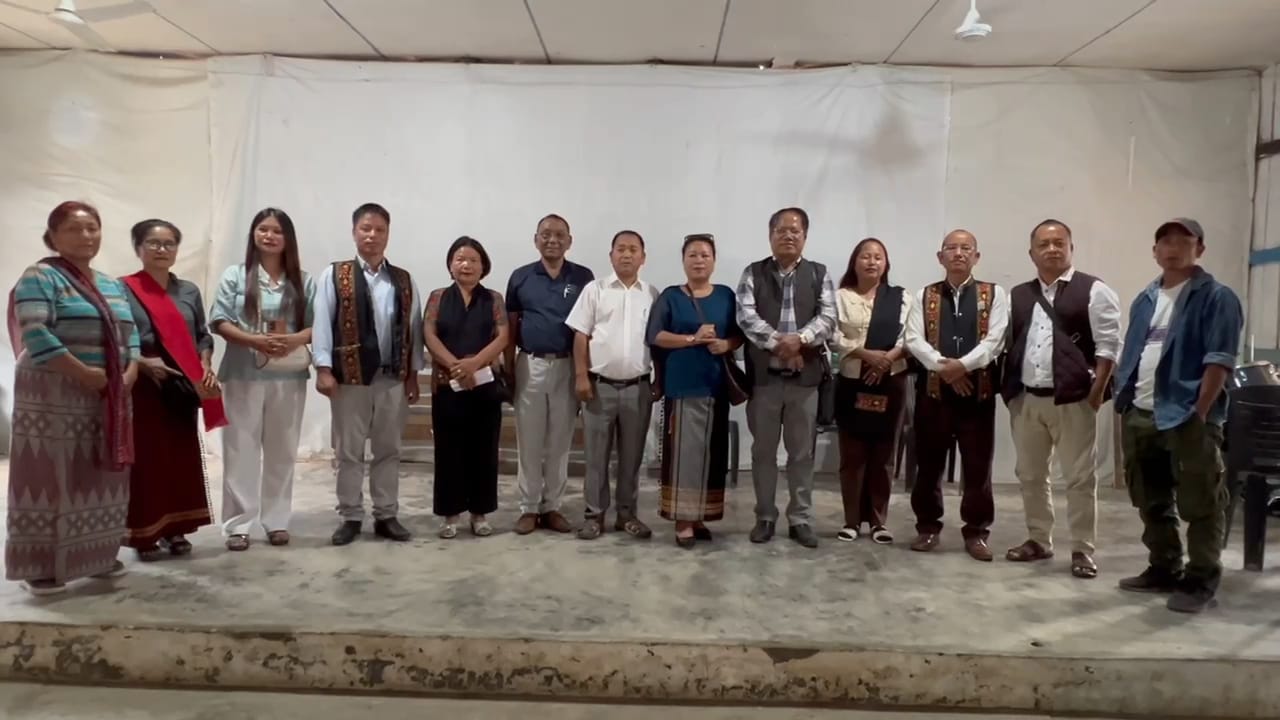
In a momentous display of unity and pride, the Kuki-Zo community in Sadar Hills, Kangpokpi District, rolled out the red carpet to honor their leaders who participated in the high-level Delhi talks with the Government of India in New Delhi on April 5. The talks, which marked a critical step in addressing the ongoing ethnic conflict, saw strong and principled representation from the Kuki-Zo leadership.
A grand public reception, organized by the Committee on Tribal Unity (CoTU), Sadar Hills Kangpokpi District, was held at the KBC Hall in Kangpokpi District Headquarters. The atmosphere was electric with emotion, anticipation, and unity as hundreds gathered to welcome the returning leaders with open arms and unwavering support.
The event was graced by a host of prominent tribal leaders including those from Kuki Inpi Sadar Hills, Thadou Inpi, various tribe-based organizations, student bodies, and women’s groups. Their presence underscored a collective commitment to justice, and the aspirations of the Kuki-Zo people.
During the reception, the Kuki-Zo leaders who participated in the Delhi dialogue took the stage to brief the community on the proceedings. They emphasized that while the talks were constructive, they chose not to sign any agreement at this juncture. The decision, they clarified, stemmed from a need to ensure that the final terms fully reflect the rightful demands and secure future of the Kuki-Zo people.
“We are not here with an agreement, but with a message—that we will not compromise our people’s future for the sake of a hurried solution,” one of the leaders declared, drawing thunderous applause from the crowd.
The event was more than just a reception; it was a reaffirmation of identity, a call for justice, and a powerful expression of solidarity. The community stood united in its resolve, sending a clear message to all stakeholders: the path to peace must be paved with fairness, respect, and the genuine inclusion of the Kuki-Zo voice.
As the curtains fell on the emotional gathering, chants of unity and determination echoed through the hills of Kangpokpi, marking yet another chapter in the people’s resilient pursuit of justice and self-determination.
Addressing the media at a high-stakes press conference, the Chairman of the Kuki-Zo Council (KZC) firmly rejected the six-point proposal set forth by the Government, stating that the terms were unacceptable and constituted the primary reason for the Council’s decision to refrain from signing the proposed agreement.
The six-point proposal set by the Government includes:
1. An appeal to their people to refrain from engaging in violence targeting members of the other community, and a call for the administration to take strong action against perpetrators of violence.
2. Appreciation for the steps taken by the Governor to facilitate the deposit of arms, along with an assurance of continued cooperation in this regard to instill a sense of security among the people.
3. An acknowledgment of the difficulties faced by the public due to the obstruction of free movement on national and state highways, and an appeal to the public to cooperate with the administration to normalize the functioning of these routes.
4. A decision to welcome any initiative by the Government to facilitate the return of internally displaced persons to their respective places, subject to logistical and security arrangements made by the Government.
5. An appeal to the Government to prioritize development activities in areas that were neglected during the conflict.
6. An agreement that all long-term and contentious issues will be taken up with the Government of India (Ministry of Home Affairs) for resolution through dialogue and consultation with the concerned communities.
The Chairman highlighted a critical flaw in the Delhi talks: the lack of genuine representation. “The Meitei civil society organisations, AMUCO and FOCS, involved in the talks do not hold a mandate from their community and cannot be considered legitimate representatives. This is the second key reason we declined to sign the agreement,” he asserted.
The KZC leader further clarified that it was, in fact, the Kuki-Zo Council that initially proposed a Cessation of Hostilities—a proposal the Government accepted by inviting both communities for talks in Delhi.
However, the first joint meeting between the Kuki-Zo and Meitei representatives quickly turned emotional, exposing the deep-rooted wounds between the communities. “When such high-level engagements are planned, the Government must first hold separate consultations with each of the warring communities,” the Chairman stressed. “Only after a breakthrough is achieved at the individual level should a joint dialogue be facilitated.”
He reiterated a strong appeal to the Ministry of Home Affairs (MHA) to engage with both the Kuki-Zo and Meitei communities separately, but strictly through mandated representatives to ensure any future talks is meaningful and legitimate.
The Chairman also expressed concern over the lack of clarity regarding the next round of talks. “We were informed that no further joint meetings will be initiated. If we are not invited or consulted, how are we expected to participate?” he questioned.
The press conference concluded with a call for a more thoughtful, structured, and respectful approach—one that acknowledges the complexity of the conflict and respects the voices of legitimate stakeholders.