
‘Tribal Heroes Were Architects of India's Freedom’: Nemcha Pays Floral Tribute to Freedom Fighters in Kangpokpi
The resistance continued until 1919, leaving behind a legacy of collective courage, indigenous unity and sacrifice.
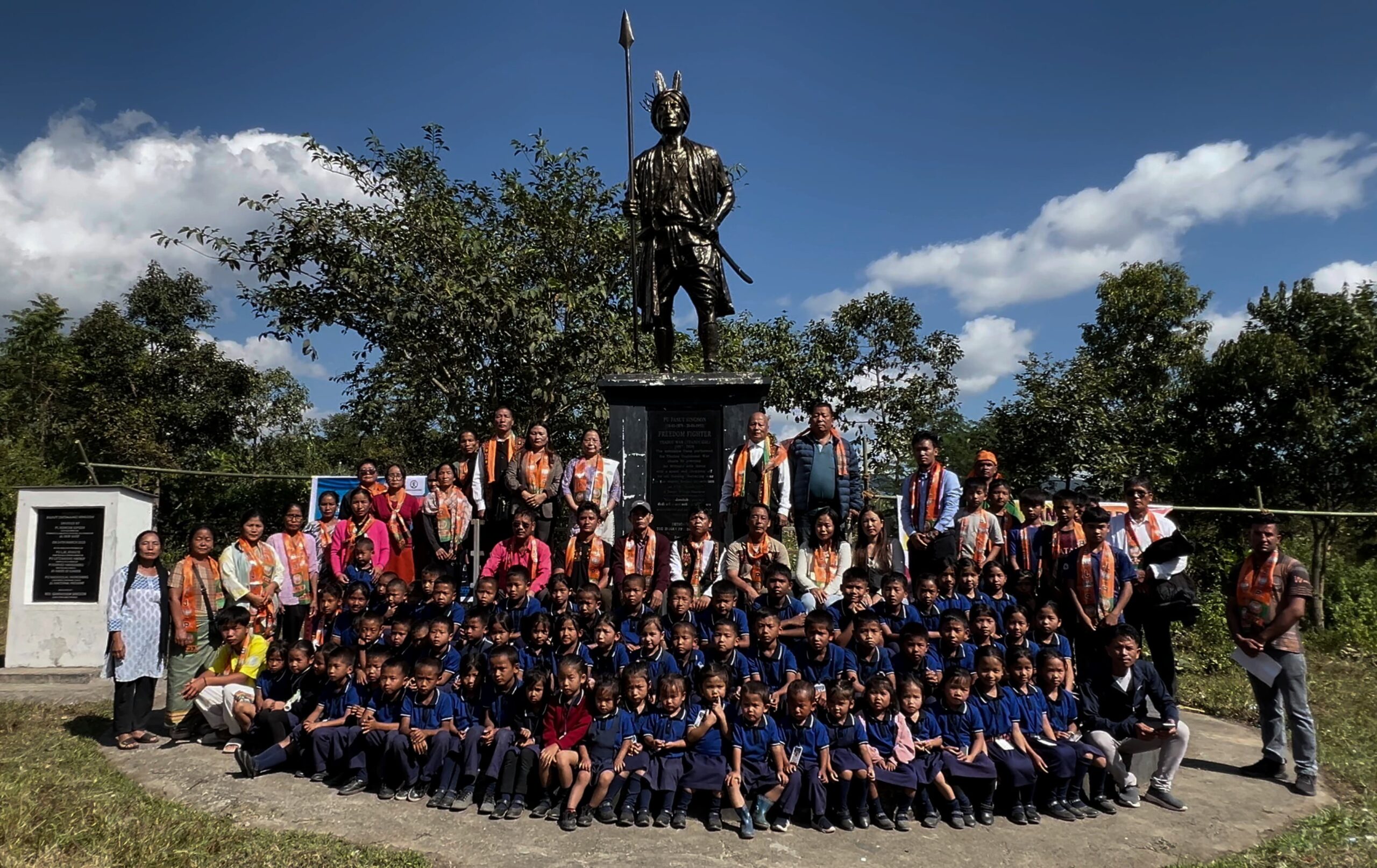
Manipur Deputy Chief Minister Nemcha Kipgen on Sunday paid rich floral tributes to freedom fighters Khotinthang Sitlhou, popularly known as Kilkhong, and Pasut Singsit at Taloulong and Gopibung in Kangpokpi district, asserting that India's freedom struggle remains incomplete without recognising the sacrifices of its tribal heroes and their fight for ancestral land, dignity and indigenous identity.
Participating in separate commemorative programmes organised by BJP Saitu Mandal and BJP Kangpokpi Mandal as part of the nationwide observance of Janjatiya Gaurav Divas, or Tribal Pride Day, Kipgen highlighted the historical contributions of tribal freedom fighters and called for their rightful recognition in India's national narrative.
At Taloulong, the Deputy Chief Minister, accompanied by BJP leaders, village chiefs, civil society organisation (CSO) representatives and descendants of the freedom fighter, paid floral tributes to Khotinthang Sitlhou, popularly known as Kilkhong, a prominent Thadou freedom fighter.
Sitlhou, then chief of Jampi village, played a significant role in mobilising Thadou-Kuki chiefs against British colonial authority. On March 17, 1917, under his leadership, chiefs assembled at Jampi and took a collective oath of resistance through the traditional war ritual known as Sajam Lhah, marking an important moment in the organised indigenous resistance against British imperialism.
The uprising was rooted in opposition to British colonial policies, including forced labour, recruitment of Kuki youths for the Labour Corps during the First World War and taxation. The resistance continued until 1919, leaving behind a legacy of collective courage, indigenous unity and sacrifice.
The Deputy Chief Minister subsequently joined another floral tribute programme at Gopibung, organised by BJP Kangpokpi Mandal, in honour of Sutmang, popularly known as Pasut Singsit, another Thadou freedom fighter associated with the historic resistance against British rule.
Pasut Singsit was among the indigenous leaders remembered for their participation in the collective resistance and the traditional war declaration at Jampi on March 17, 1917, symbolising the chiefs' determination to oppose colonial authority.
Kipgen, along with the freedom fighter's grandchildren, village chiefs, CSO leaders, students and party workers, paid floral tributes in recognition of his courage and contribution to the indigenous freedom struggle.
Floral tributes were also paid to the statue of Chengjapao Doungel at C. Aisan village in Saikul subdivision of the district during a programme organised by the BJP's Saikul Mandal.
Chengjapao Doungel, popularly known as Kuki Raja, was another prominent tribal freedom fighter from present-day Kangpokpi district. Widely regarded as the senior-most Kuki chief of his time, he was recognised by the British as an influential leader and played a pivotal role in mobilising Kuki chiefs against colonial policies. He spearheaded the resistance against British rule during 1917–1919, emerging as a formidable symbol of tribal courage, unity and defiance against colonial oppression.
As part of the floral tributes to the freedom fighters of Kangpokpi district, Manipur Deputy Chief Minister Nemcha Kipgen paid homage to Bhagwan Birsa Munda on his 151st birth anniversary, describing his sacrifices and struggle as an enduring source of inspiration for tribal communities across the country.
Emphasising the historical significance of Birsa Munda's contribution, Kipgen said, “The Rights and Recognition Tribal Communities Enjoy Today Are the Fruits of Birsa Munda's Sacrifice and Struggle.”
She underscored that tribal freedom fighters were not peripheral figures in India's freedom movement but played a significant role in shaping the country's history and indigenous consciousness.
“Our Tribal Freedom Fighters Were Not Footnotes in India's History; They Were Architects of Its Freedom and Indigenous Identity,” she said.
Drawing a connection between the sacrifices of Birsa Munda and the Thadou-Kuki freedom fighters, Kipgen said their struggles represented a shared legacy of courage, resistance and sacrifice in defending indigenous communities against colonial oppression.
“From Birsa Munda to Khotinthang Sitlhou, Pasut Singsit and Chengjapao Doungel, Our Tribal Heroes Share a Legacy of Courage, Resistance and Sacrifice,” she said.
The Deputy Chief Minister's message also highlighted the continuing relevance of the struggle for ancestral land, indigenous identity and customary rights. Birsa Munda's resistance against the dispossession of tribal communities, she indicated, remains an important historical reminder of the need to protect the rights, heritage and dignity of indigenous people.
The historical connection carries particular significance for Manipur, where ancestral land, customary institutions, indigenous identity and territorial security remain central concerns amid the prolonged ethnic crisis that erupted in May 2023.
Kipgen also expressed heartfelt gratitude to the top leadership of the BJP-led Central Government, particularly Prime Minister Narendra Modi, for according increasing nationwide recognition to tribal freedom fighters and bringing their contributions into the mainstream national narrative.
"The growing national recognition of tribal freedom fighters and their historical contributions and sacrifices through national commemorations, museums and educational initiatives gained momentum after the BJP-led government, under the leadership of Prime Minister Narendra Modi, declared November 15 as Janjatiya Gaurav Divas (Tribal Pride Day) to commemorate the birth anniversary of Bhagwan Birsa Munda," Nemcha said.
“The Recognition of Tribal Heroes Under PM Modi's Leadership Is a Historic Step Towards Restoring Their Place in India's National Narrative,” she said.
She further stressed that the nation's account of its freedom struggle would remain incomplete without acknowledging the sacrifices of indigenous communities and their historical fight for land, dignity and identity.
“The History of India's Freedom Struggle Is Incomplete Without the Recognition of Its Tribal Heroes and Their Fight for Land, Dignity and Indigenous Rights,” she said.
The Government of India declared November 15 as Janjatiya Gaurav Divas in 2021 to honour Bhagwan Birsa Munda and recognise the contributions and sacrifices of tribal freedom fighters across the country.
The observance underlines the importance of preserving indigenous history, celebrating tribal cultural heritage and acknowledging the role of tribal communities in India's freedom struggle and nation-building.
For Manipur and the wider Northeast, the commemoration also serves as a reminder that the sacrifices of indigenous freedom fighters from the region deserve greater documentation, historical recognition and a rightful place in the country's national consciousness.
The floral tribute programmes at Taloulong and Gopibung thus went beyond ceremonial remembrance, bringing renewed attention to the legacy of freedom fighters from the district and the enduring struggle of indigenous communities for land, identity, dignity and recognition.


The Hills Journal
K. Salbung, Churachandpur
Manipur-795128